
That in-ground pool that seemed like a dream when you bought the place can turn into a money pit of liners, chemicals, and repairs. When you finally decide it has to go, you hit a fork in the road: full pool demolition or a cheaper partial fill-in. Our swimming pool removal crews get this question every week across the GTA, and the right answer depends on your budget, your yard, and what you plan to do with the space.
Quick answer first. Choose full removal if you plan to sell soon, want to build where the pool sits, or have drainage concerns. Choose a partial fill-in if budget matters most, you are staying put, and you just want usable yard again. The rest of this guide breaks down the cost, time, drainage, resale, and future-use trade-offs so you can decide with confidence.
In This Article
Full Removal vs. Partial Fill-In: The Basics
Both options end with a pool-free yard, but they get there very differently. Understanding the two methods is the key to picking the right one.
Full Pool Demolition
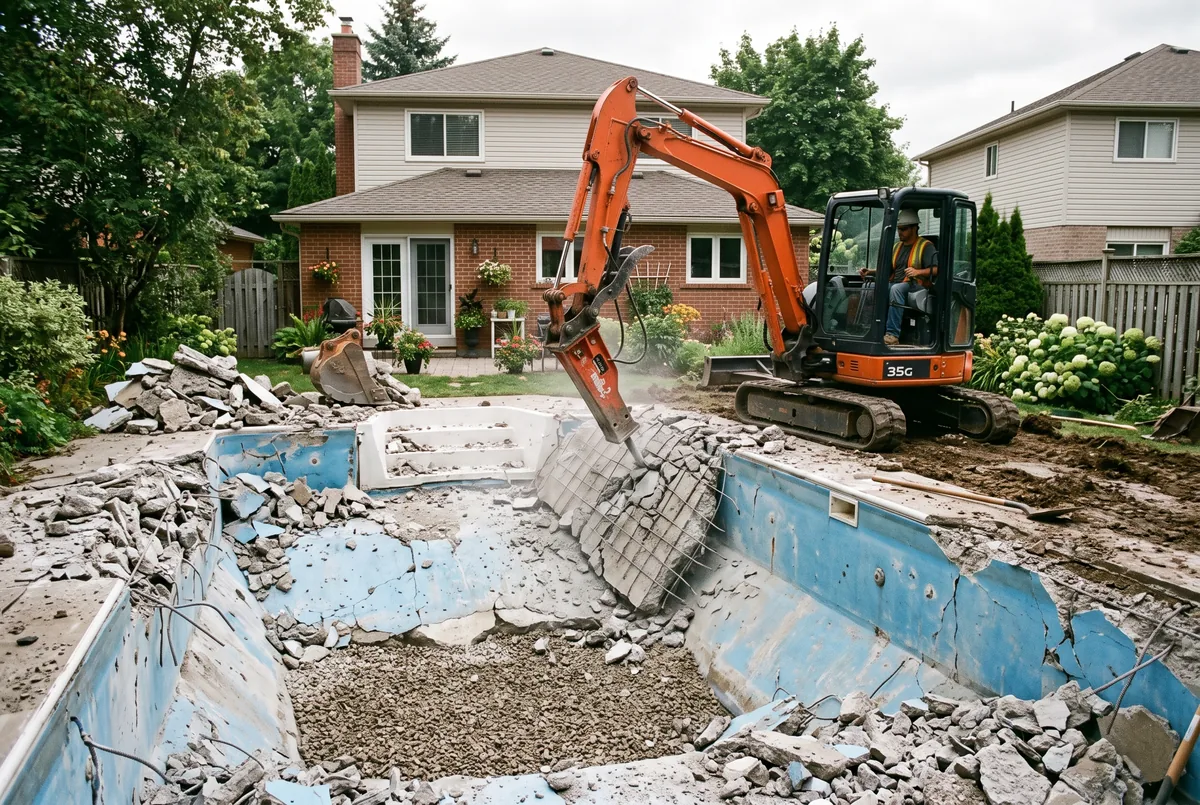
In a full removal, the crew drains the pool, breaks up the entire shell, and hauls every bit of concrete, fibreglass, or vinyl and steel off site. The hole is then backfilled with clean, compacted fill and graded flat. You are left with stable, buildable ground and no trace of the pool underneath.
Partial Removal, or Fill-In
A partial fill-in breaks the top eighteen inches or so of the shell, punches drainage holes through the pool floor, and buries the rest under engineered fill. Less concrete leaves the site, so it is faster and cheaper. The trade-off is that buried material stays in the ground, which limits what you can build there and has to be disclosed when you sell.
Did You Know?
The concrete, rebar, and old decking from a pool removal can often be recycled rather than sent to landfill. A demolition contractor that sorts the debris keeps disposal costs down and reduces what ends up in the dump, which is worth asking about when you compare quotes.
Side-by-Side Comparison of the Two Options
Here is how full removal and a partial fill-in stack up on the five factors that matter most to GTA property owners.
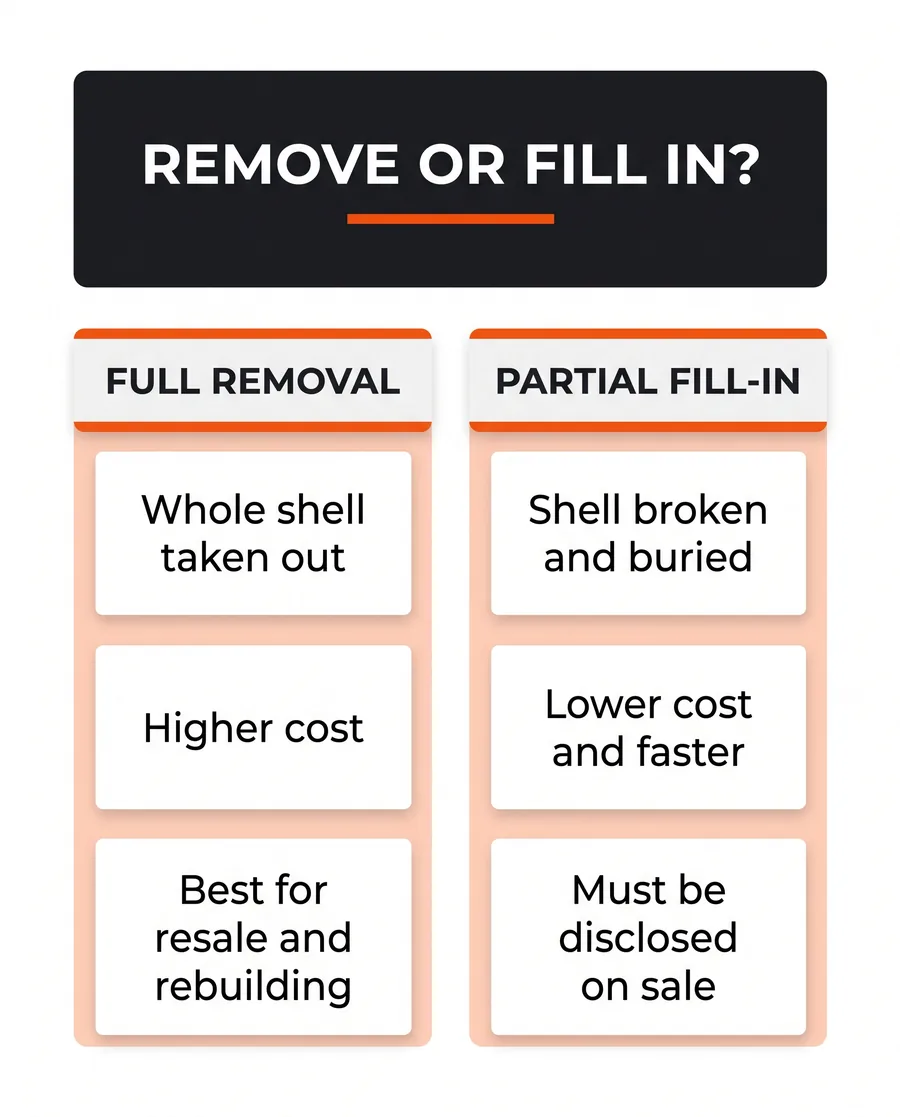
| Factor | Full Pool Demolition | Partial Fill-In |
|---|---|---|
| Typical cost | Higher, more concrete hauled and disposed | Lower, often a few thousand dollars less |
| Time on site | Roughly three to five days | Roughly two to three days |
| Resale disclosure | Clean lot, nothing to disclose | Must be disclosed to buyers |
| Drainage risk | Minimal, the void is gone | Low if done right, higher if rushed |
| Future use | Buildable, supports structures | Lawn, garden, or patio only |
Save Your Money
If you are also getting rid of an old deck, hot tub, or shed near the pool, bundle them into one job. The crew is already mobilized with machines and disposal bins on site, so adding a deck or hot tub removal costs far less than booking it as a separate visit later.
What Full Pool Demolition Involves
Full removal is the more thorough option, and the one most owners choose when resale or rebuilding is on the table. The steps look like this:
- Permits and disconnects. The contractor pulls the required demolition permit and arranges to cap water, gas, and electrical lines feeding the pool and its equipment.
- Drain and dewater. The pool is drained legally, following local rules about where the water can go.
- Break out the shell. An excavator breaks up the concrete, fibreglass, or vinyl-and-steel structure completely.
- Haul and recycle. All debris leaves the site, with concrete and steel recycled where possible.
- Backfill and grade. Clean fill goes in compacted layers, then the surface is graded to drain and ready for sod or a patio.
Because everything comes out, the ground can support a garage, an addition, or landscaping without the settling risk that buried material brings. It is the route we recommend for anyone selling or rebuilding, and it pairs naturally with our broader home demolition work.
When Filling In a Pool Makes Sense
A partial fill-in is not a shortcut to avoid, it is a legitimate choice for the right situation. It makes sense when:
- Budget is the priority, and you want the pool gone for the lowest reasonable cost.
- You are staying long term and are not planning to sell in the near future.
- You want simple yard space such as a lawn, garden bed, or patio rather than a building.
- Access is tight and hauling out every piece of the shell would be difficult or expensive.
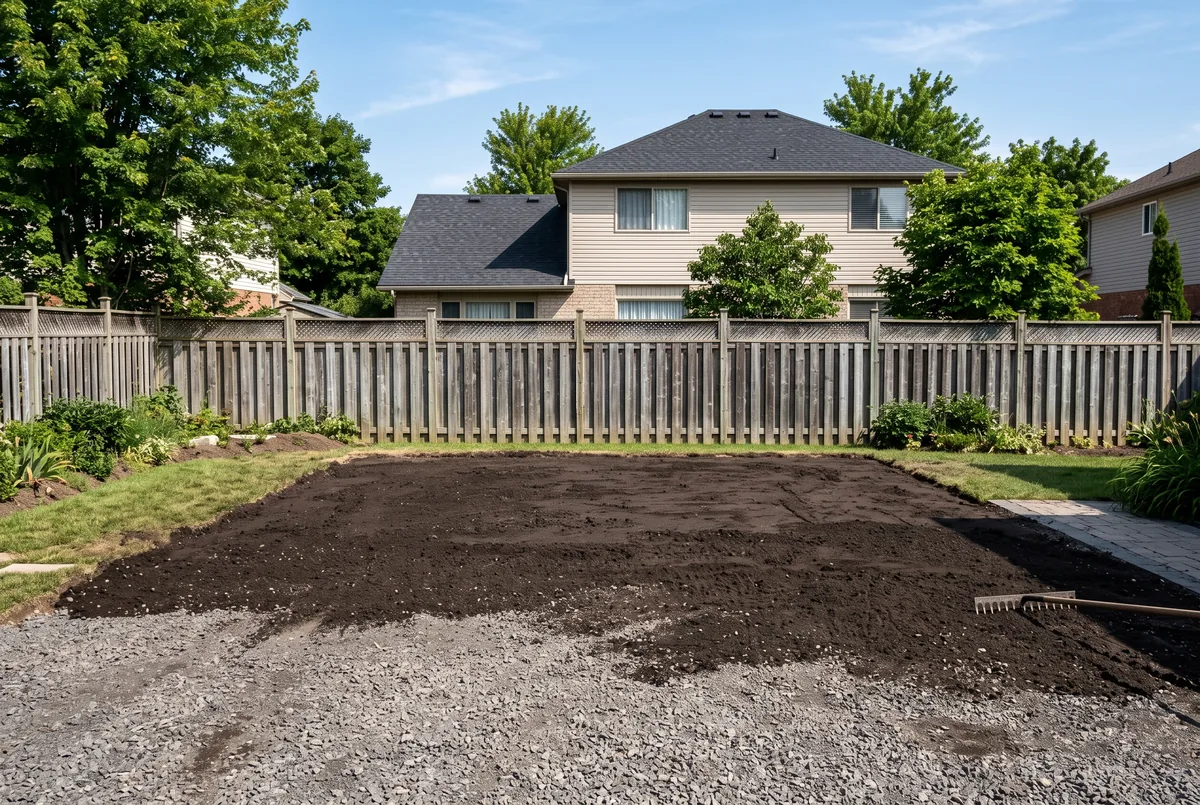
The one non-negotiable is that a fill-in must be done properly: drainage holes in the floor, engineered fill in compacted layers, and correct grading. Done right, it gives you years of trouble-free yard. Done cheaply, it settles and turns soggy. A licensed contractor is the difference.
People Often Ask: Can I Just Bury the Whole Pool As-Is?
No. Dropping loose fill into an intact shell traps water and almost guarantees settling, plus it fails disclosure and inspection later. A proper fill-in breaks the shell, drains the base, and compacts engineered fill. If someone quotes you a suspiciously cheap bury-it-whole job, keep looking.
Disclosure and Resale Implications in Ontario
This is the factor owners most often overlook, and it can matter more than the price difference. A filled-in pool is a material fact about your property. When you sell, buyers and their inspectors want to know what is buried in the yard, because it affects drainage, future building, and value.
If you fill out a Seller Property Information Statement, you are expected to disclose a known fill-in, and staying silent about a defect you know about can lead to a claim after closing. Ontario buyers and sellers are protected under rules administered by the Real Estate Council of Ontario, so it pays to be upfront. Full removal sidesteps the whole issue because there is nothing left to disclose.
There is a permit and safety side too. Before you touched the pool, its enclosure had to meet local rules such as the City of Mississauga’s Swimming Pool Enclosure By-law, and removing the pool means dealing with that fencing and any final inspection correctly. A contractor who works in the GTA knows the local steps and keeps the paperwork clean for your file.
Please note: Costs, timelines, permit rules, and disclosure obligations vary by municipality and by property, and they change over time. This article is general information for GTA property owners, not legal, real estate, or engineering advice. Confirm disclosure duties with a licensed real estate professional and permit rules with your local municipality before you decide. ALMAR Demolition is not liable for decisions made from this guide.
Estimate Your Pool Removal
Use the quick estimator below to get a rough planning range for your pool. Enter the size and pick an option to see the ballpark for full removal versus a fill-in. It is only a starting point, so treat a free on-site quote as the real number.
Rough Pool Removal Estimator
Very rough planning ranges only. Access, pool type, disposal, and grading change the real price. Ask for a free on-site quote.
Pro Tip
Decide what you want the space to become before you choose a method. If there is any chance you will build there or sell within a few years, the extra cost of full removal usually pays for itself. If you just want lawn and you are staying put, a proper fill-in is money well saved.
Download the Free Quick Guide
Frequently Asked Questions
Is Filling In a Pool Cheaper Than Full Pool Demolition?
Yes, usually by a wide margin. A partial fill-in breaks the top of the shell, punches drainage holes in the bottom, and buries the rest under engineered fill, so there is far less concrete to haul away and less labour overall. Full pool demolition removes the entire shell and every bit of rubble leaves the site, which drives up disposal and machine time. For many GTA yards, a fill-in runs a few thousand dollars less than a full removal. The catch is that the savings come with a permanent disclosure obligation, so the cheaper option is not always the better long-term value.
Do I Have to Tell Buyers the Pool Was Filled In?
In practice, yes, and you should. A filled-in pool changes what is under the yard, and buyers, home inspectors, and lenders care about that. If you complete a Seller Property Information Statement through your agent, hiding a known fill-in can expose you to a claim later. Ontario buyers are protected by consumer rules overseen by the Real Estate Council of Ontario, and honesty here protects you as much as them. Keep your permit, engineered fill records, and site photos so you can show the work was done properly. Transparency turns a potential red flag into a non-issue.
Does a Filled-In Pool Cause Drainage or Settling Problems?
It can if the work is done poorly, which is exactly why the method matters. A proper partial fill-in requires holes cut in the pool floor so water drains instead of pooling, plus compacted, engineered fill added in layers rather than dumped in loose. Skip those steps and the ground can settle, leaving a low, soggy spot years later. A licensed contractor grades the surface to shed water and documents the fill. Full removal avoids the risk almost entirely because the void is gone, which is one reason it is preferred where drainage or a high water table is a concern.
Can I Build a Garage or Addition Where the Pool Was?
Only reliably after a full removal. Buildable ground needs to be stable and properly compacted all the way down, and a partial fill-in leaves buried concrete and fill that most engineers will not sign off on for a foundation. If your plan is a garage, an addition, or anything structural where the pool sits, full pool demolition is the route that frees the land for future construction. If you only want a lawn, garden, patio, or play space, a well-built fill-in is usually fine. Tell your contractor your end goal up front so the method matches the plan.
How Long Does Pool Removal Take in the GTA?
A partial fill-in is often a two to three day job once permits and utility disconnects are sorted, since less material leaves the site. A full removal typically takes three to five days because the entire shell is broken out, hauled away, and the void is backfilled and graded. Weather, access for machines and trucks, and the pool type all shift the timeline. Booking in spring or early fall usually means easier scheduling and better ground conditions. A site visit gives you a firm window, and bundling a deck or hot tub removal into the same job saves time and money.
Keep Reading
ALMAR Demolition removes and fills in pools across Mississauga and the wider GTA, including Brampton, Oakville, Vaughan, and Toronto. We handle the permits, disconnects, drainage, and disposal, and we will tell you honestly which option fits your yard and your plans. Book a free estimate or explore our swimming pool removal service to get started.