
Published 16 September 2026
An extended teardown can leave a property open for weeks, and every one of those days is a chance for theft, trespassing, or an injury that lands on you. Strong property security during demolition is what keeps a long full-scale property teardown from turning into an insurance claim, a stop-work order, or a fight with the neighbours. It is not complicated, but it does need a plan before the first wall comes down.
Here is the short version. Fence the whole work zone, control who gets in, kill the utilities, keep the dust and debris on your side of the line, and document everything. Below we walk through each layer, in the order that actually matters on a site that stays open for a month or more.
In This Article
Why Property Security During Demolition Matters
A short interior strip-out is locked inside your house every night. An extended project is different. The building is opened up, tools and materials sit on site, and there is often a gap in the fence where a driveway used to be. That combination is what draws copper thieves, curious kids, and the occasional late-night wanderer.
The stakes are not just stolen tools. If someone gets hurt on your open site, even a trespasser, you can be on the hook. Ontario treats an active demolition as a construction project with real duties for the person who controls it. Getting security right protects your budget, timeline, and liability at once.
Quick Take
Treat an extended demolition like a live construction site, not a pile of junk nobody wants. Fence it, control the single way in, cut the utilities, and keep a dated record. Those four habits prevent the large majority of theft, injury, and complaint problems.
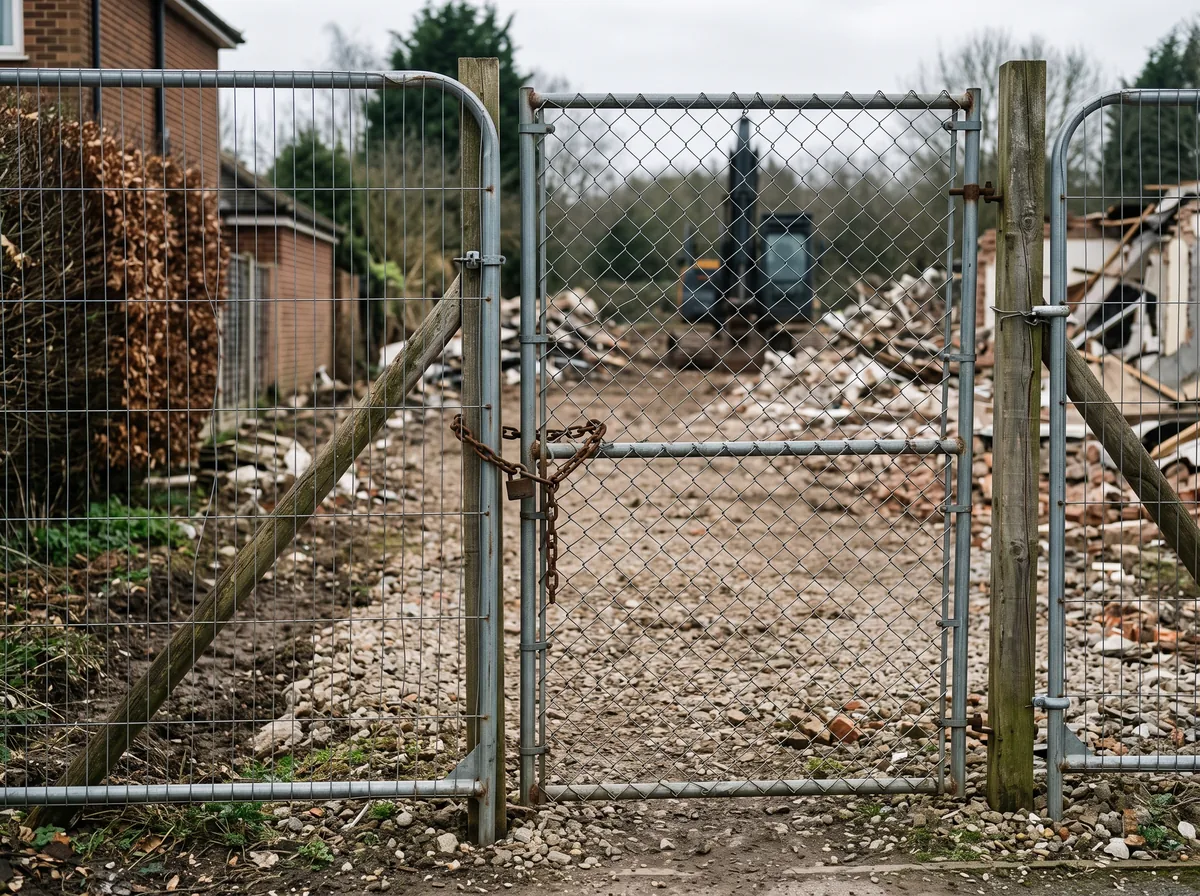
The Real Risks on an Open Demolition Site
Before you can secure a site, it helps to know what you are actually defending against. On a longer GTA demolition, the recurring problems tend to be:
- Theft of tools, copper, wiring, appliances, and salvageable fixtures left on site overnight.
- Trespassing by neighbours, kids, or passersby who see an open building as an invitation.
- Injuries from sharp debris, unstable framing, open excavations, or a partially standing structure.
- Live-hazard exposure if power, gas, or water is not fully disconnected and tagged off.
- Dust, mud, and flying debris drifting onto neighbouring yards, cars, and the public sidewalk.
- Vandalism and dumping, where an open lot quietly becomes someone else’s garbage drop.
Red Flag: An Unsecured Structure
A half-demolished building is far more dangerous than a finished one. Floors may be cut, stairs removed, and walls left without their usual bracing. If a member of the public can walk into that, you are carrying a serious risk every single night the site sits open. Barriers are not optional.
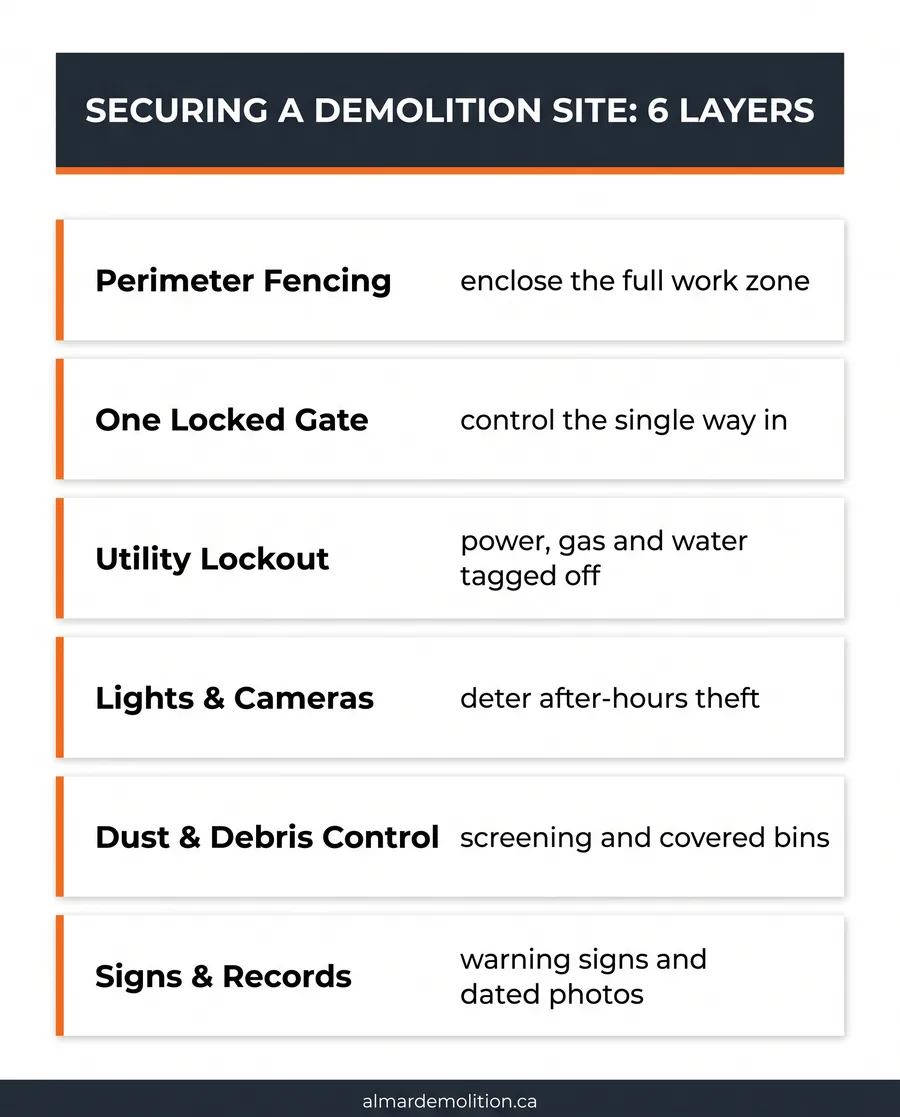
How to Lock Down Your Site Step By Step
The steps below are general planning guidance for property owners, not a safety or legal standard. An active demolition involves hazards that need trained crews and, in most cases, a licensed demolition contractor and the right municipal permits. ALMAR Demolition is not responsible for injury, loss, or cost from work managed on the basis of this article. When in doubt, hire a pro.
- Fence the whole work zone first. Put temporary fencing or solid hoarding around the entire footprint before demolition starts, not after, so the site is never open and unattended.
- Set one controlled entry point. Leave a single lockable gate for people and equipment, and keep every other gap closed so you always know where access happens.
- Disconnect and tag the utilities. Have power, gas, and water capped by the proper trades and clearly marked off, so nothing on site is live while the building sits open.
- Secure or remove anything worth stealing. Take tools, copper, and salvageable fixtures off site overnight, or lock them in a container that stays inside the fence.
- Light it and watch it. Add motion lighting and a couple of visible cameras, or a monitored unit for higher-risk locations, so the site is not a soft target after dark.
- Contain the mess. Use screening, covered bins, and daily cleanup to keep dust and debris on your property and off the neighbours and the road.
- Post signs and a contact. Warning signs and a site contact number at the gate tell people to stay out and give anyone with a concern someone to call.
- Do a daily close-out. At the end of each work day, walk the perimeter, confirm the gate is locked, the utilities are still off, and nothing hazardous is left exposed.
Pro Tip
Photograph the site at the end of every week, including the fence line, the locked gate, and the utility shut-offs. If a claim or complaint ever comes up, a dated photo record showing the site was secured properly is worth more than any verbal reassurance.
Building a Layered Security Plan
No single measure covers everything. A fence keeps honest people out but will not stop a determined thief. A camera records a break-in but does not prevent it. The trick is to stack a few simple layers so a gap in one is covered by another. Think of it in two buckets.
Physical Barriers That Keep People Out
Fencing and hoarding are your first and most important line. On a long project, solid hoarding also blocks the view of anything worth taking and helps contain dust. Keep the barrier continuous, anchor it against wind, and repair any damage the same day it happens.
Monitoring That Catches What Slips Through
Lighting, cameras, and clear signage handle the hours when nobody is on site. Visible cameras and motion lights are as much a deterrent as a record, and a monitored alarm is a reasonable step up for busier areas or sites with a history of theft.
| Security Layer | Risk It Reduces | What It Looks Like On Site |
|---|---|---|
| Perimeter fencing or hoarding | Trespassing, theft, injury claims | Continuous site fence or solid hoarding around the full work zone |
| Single controlled entry | Untracked access, tool loss | One locked gate, keys with the site lead, everything else closed |
| Lighting and cameras | After-hours theft and vandalism | Motion lights plus visible cameras, or a monitored unit |
| Dust and debris control | Neighbour complaints, road hazards | Screening, covered bins, and daily cleanup of the site |
| Utility lockout | Fire, flooding, live-wire contact | Power, gas, and water capped and clearly tagged off |
| Signage and site contact | Confusion, unsafe entry | Posted warning signs and a contact number at the gate |
Save Your Money
Renting a fence and a container for the full run of the project is far cheaper than one break-in, one injury claim, or one bylaw fine for debris on the road. Price the security into the job from the start and it stops being a surprise cost later.
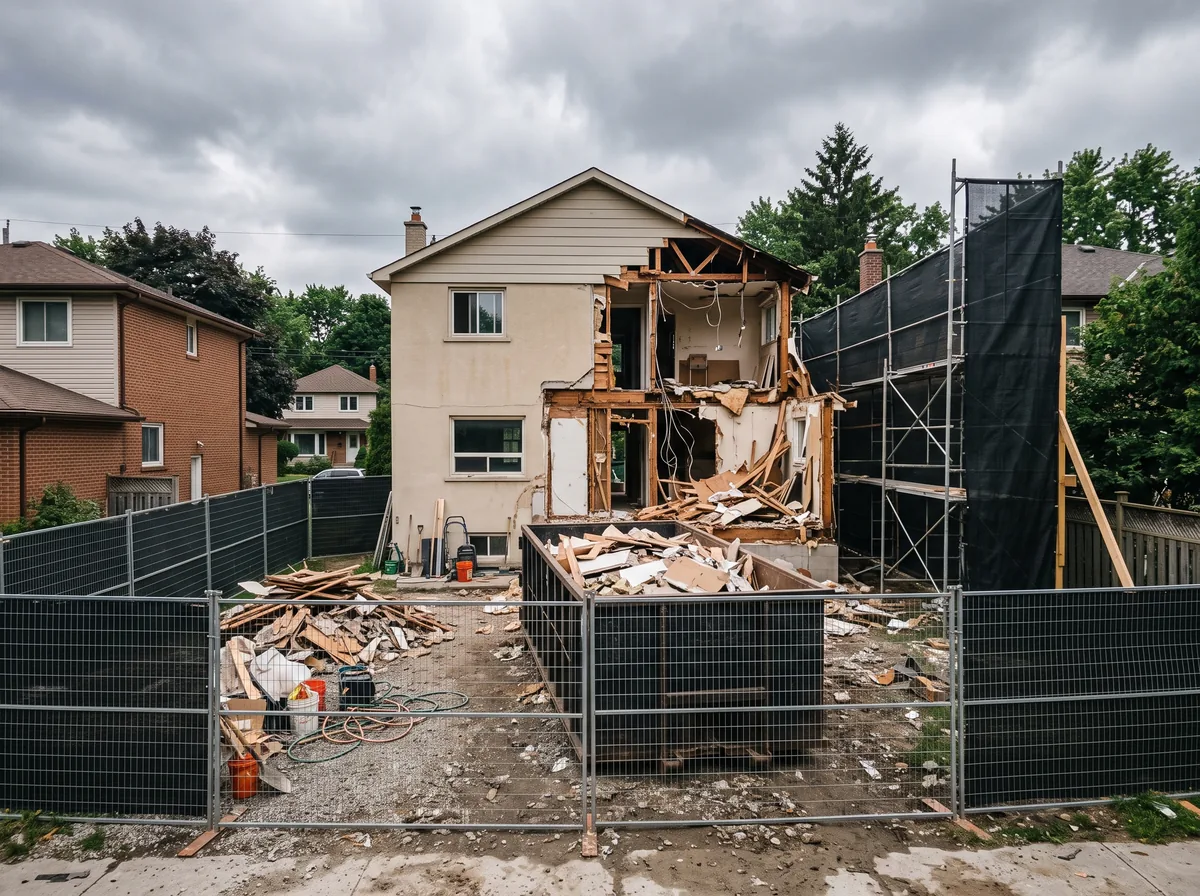
Insurance, Liability, and Documentation
Security is not only physical. Confirm the work is covered by proper liability insurance, and if a contractor is running the site, that their coverage is current. A cheap crew with no real coverage can leave you exposed for anything that happens on your property.
Keep a simple running record while the project is open: dated site photos, disposal receipts, your permit, and notes from any neighbour conversations. If a dispute or a question from the city ever comes up, that record is what settles it quickly, and it makes handing over a clean, secured lot much smoother when the work wraps.
Download the Free Quick Guide
A one-page checklist to keep an extended demolition site secure from the first day to the last.
Download the Free Site Security Checklist (PDF)The Bottom Line on Site Security
An open demolition site is a responsibility, not just a work area. Fence the whole zone, control the one way in, cut the utilities, keep the dust and debris contained, and document as you go. Do those few things consistently and an extended project stays boring, which on a demolition site is exactly what you want. If you would rather hand the whole thing to a crew that secures the site as part of the job, that is what an experienced contractor is for.
Frequently Asked Questions
Planning a demolition that will keep your property open for weeks? ALMAR Demolition secures the site as part of the job, from fencing and utility lockout to safe teardown and clean disposal, on commercial teardown sites and homes across Toronto, Scarborough, Etobicoke, and the wider GTA. Request a free estimate and we will build the security plan into your project from day one.