Published 13 May 2026. Last updated .
In this article
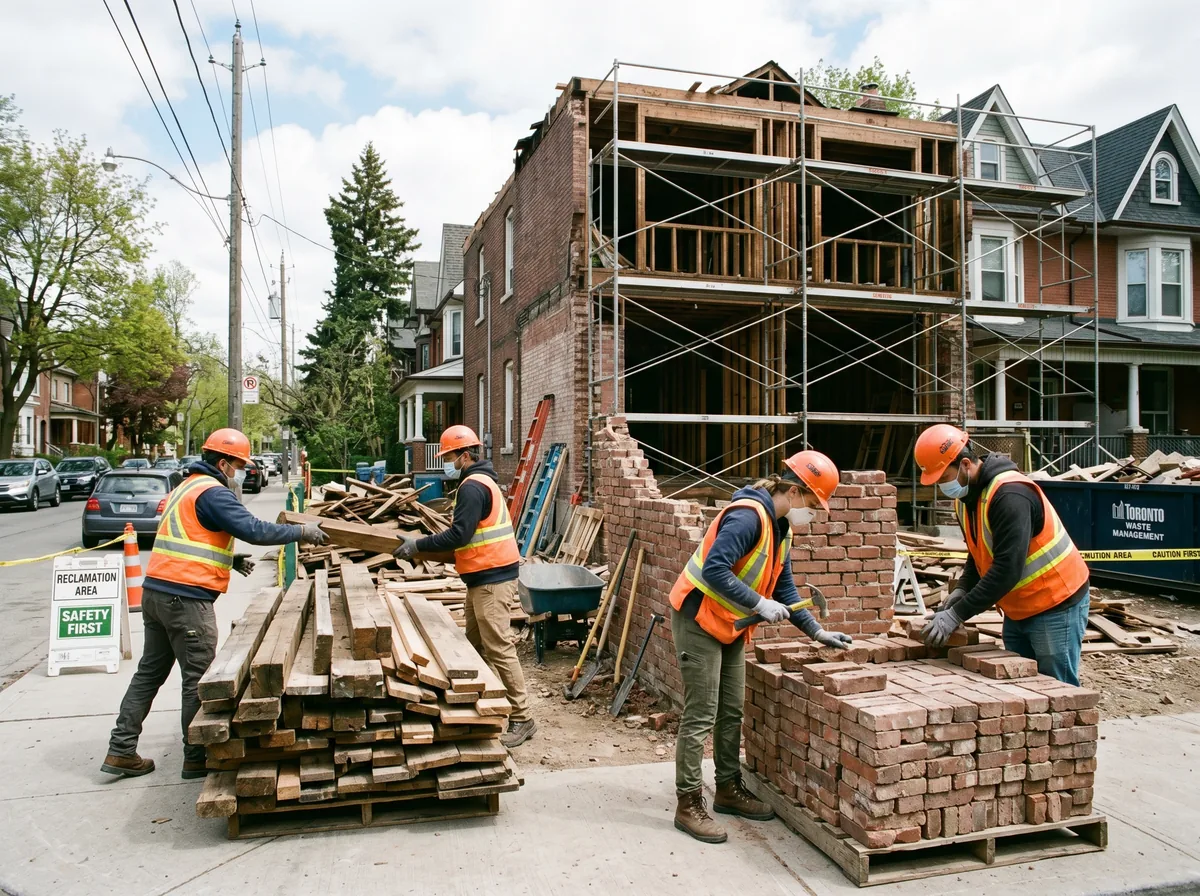
When analyzing deconstruction vs demolition, the biggest differentiator is the human element. Deconstruction is the systematic, manual dismantling of a building with the strict goal of recovering usable materials. Workers carefully remove components, roofing, windows, doors, flooring, lumber, bricks, and fixtures, piece by piece in roughly the reverse order of their original installation. Salvaged items are sorted, cleaned, and either resold, donated, or reused in the new build.
Understanding the Manual Deconstruction Process
The process is incredibly labour-intensive by design. A full residential property that might take two days to clear with a heavy excavator can take two to three weeks with a manual crew. That time investment is the entire point: it is how materials stay out of the landfill and remain in the supply chain.
This method has seen growing uptake across the GTA as material costs rise and property owners prioritize sustainability and salvaging materials during demolition.
How Standard Mechanical Demolition Works
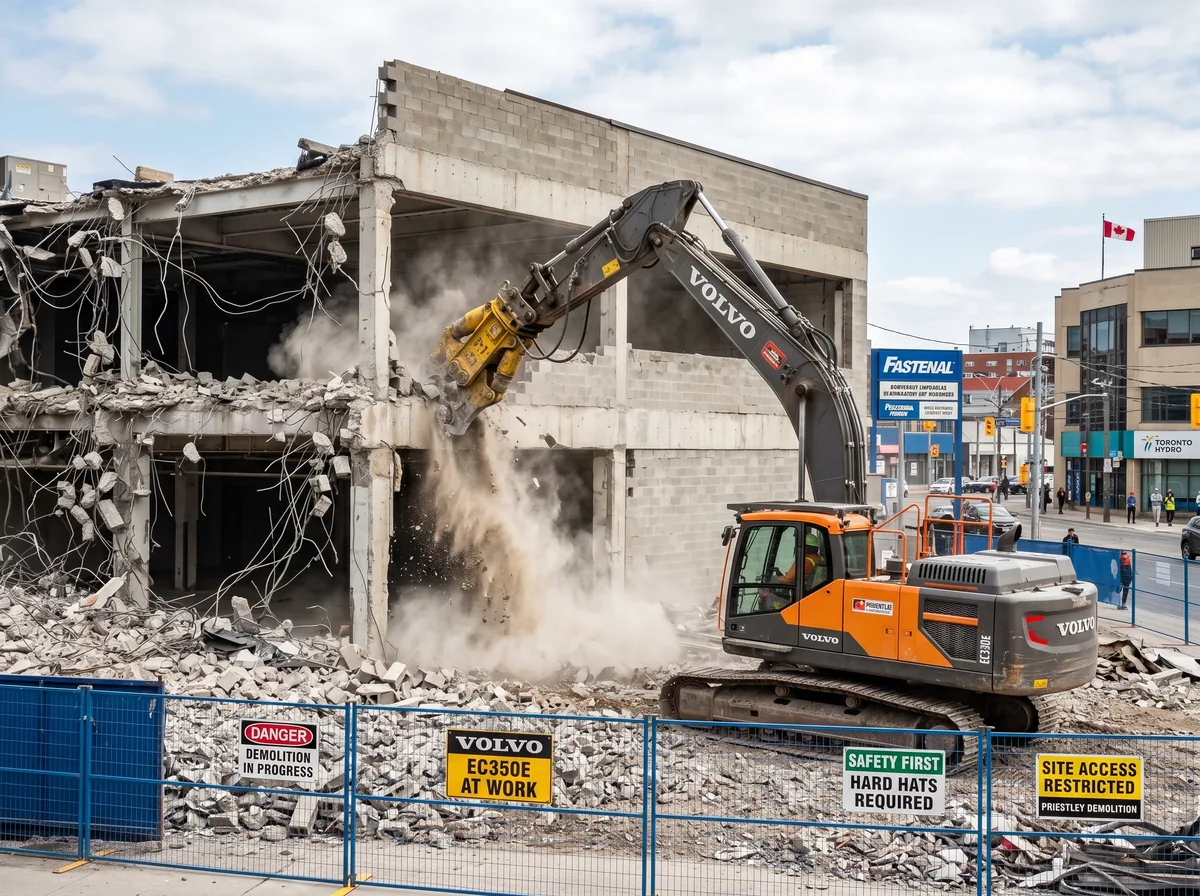
Standard mechanical teardowns utilize excavators, skid steers, and hydraulic attachments to bring down a structure with massive efficiency. The entire building, framing, concrete, masonry, and sheathing, is broken down rapidly and sorted into broad categories for disposal or recycling. Concrete is crushed and recycled, metal is separated for scrap, and mixed debris goes to local facilities.
This approach is dramatically faster. A residential house demolition can be fully leveled and the lot cleared in one to three days. This speed is a major advantage when project timelines are tight, carrying costs on a vacant lot are significant, or the structure simply is not worth the labour investment (heavily damaged buildings, structures with hazardous materials, and post-1960 residential stock often fall into this category). For efficient tear-downs, hiring a highly experienced demolition company ensures the job is done safely and legally.
Comparing Project Costs and Timelines
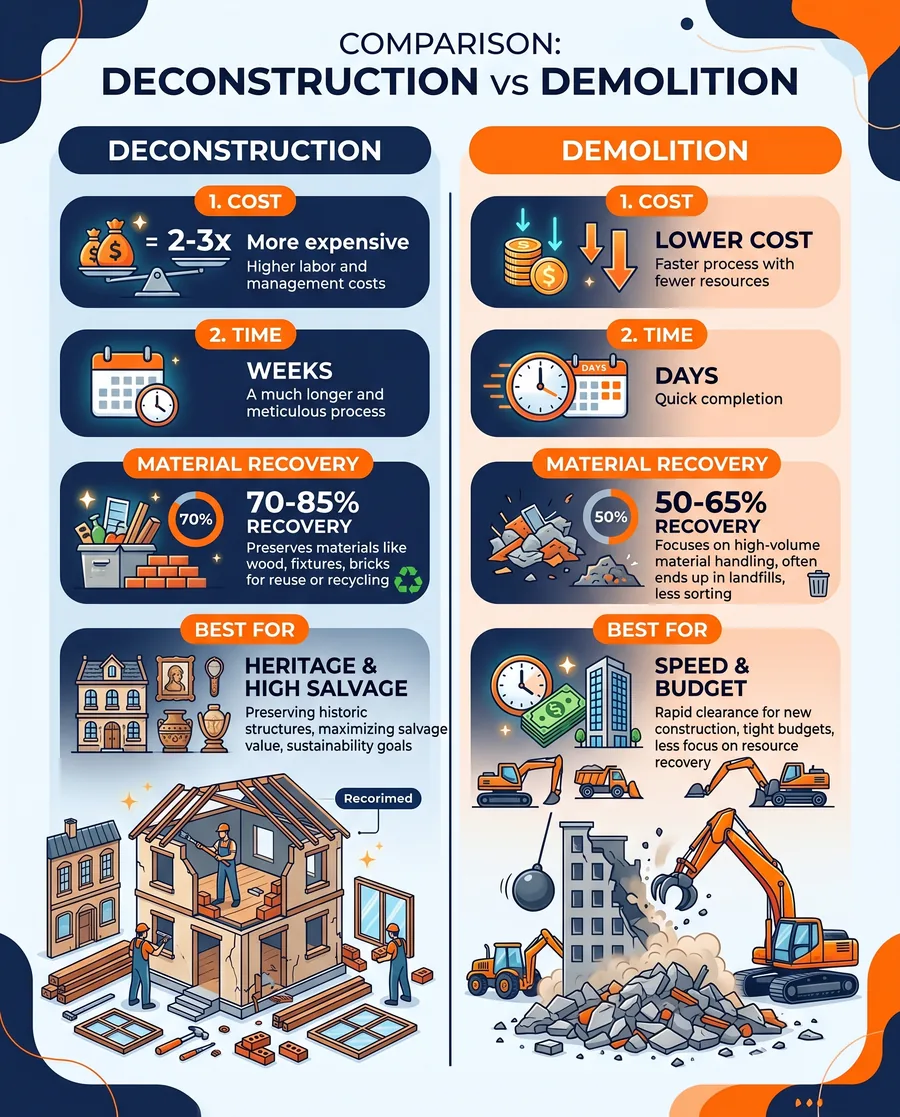
Mechanical removal of a typical GTA detached house generally costs between $15,000 and $35,000 and takes 1 to 5 days of active work. Manual dismantling of the exact same structure can cost $30,000 to $70,000 and take 2 to 4 weeks. The cost difference is almost entirely driven by labour: preserving materials requires significantly more person-hours from skilled workers who know how to extract components without destroying them.
The economics only shift if the salvaged materials possess exceptionally high value. Old-growth Douglas fir framing, original hardwood flooring, antique fixtures, and handmade bricks can be worth thousands on the secondary market. However, for most homeowners, the calculation is values-based: accepting a higher upfront cost in exchange for a reduced landfill footprint.
| Project Factor | Mechanical Demolition | Manual Deconstruction |
|---|---|---|
| Typical Residential Cost | $15,000 to $35,000 | $30,000 to $70,000 |
| Active Timeline | 1 to 5 days | 2 to 4 weeks |
| Landfill Diversion Rate | 50% to 65% | 70% to 85% |
| Best Suited For | Tight timelines & budgets | High salvage value & green mandates |
Environmental Impact and Material Recovery Rates
According to provincial data, construction and teardown waste accounts for roughly 30% of landfill volume. While manual dismantling is a fantastic tool for reducing that footprint, it is important to understand the broader Ontario waste management context. Even standard heavy machinery projects involve significant material diversion: concrete is universally crushed for aggregate, and scrap metal is aggressively recycled.
Manual stripping maximizes wood recovery and fixture reuse, both of which have tremendous environmental value. A realistic manual project might divert 70% to 85% of materials from the landfill, compared to 50% to 65% for a well-run mechanical teardown. Neither is a perfectly zero-waste process; contaminated materials and adhesive-bonded composites inevitably require proper disposal. National organizations like Habitat for Humanity ReStores accept donated materials from these projects and can often issue a charitable tax receipt for the property owner.
Choosing the Right Method for Your Project
Mechanical leveling is the absolute right call when the structure is heavily damaged, time is critical, the property has no significant salvageable content, or the project budget is constrained. It is also the undeniable choice for commercial demolition services, where the sheer scale and commercial materials do not lend themselves to manual recovery.
Manual dismantling makes sense when the structure has exceptionally high-value components, the owner has a strong sustainability mandate, and the project schedule is flexible. For instance, carefully demolishing parts of a heritage home in Ontario is a perfect candidate for manual recovery, as the antique materials have genuine cultural and market value.
Practical Tip for Property Owners
Top-tier demolition contractors should be transparent about which approach genuinely fits your specific situation, rather than defaulting to whichever method is most profitable for them. Always ask for their recommendation and the logistical reasoning behind it.
The Hybrid Approach: Strip-Outs and Demolition
Many GTA developers use a hybrid method: a manual interior strip-out demolition to recover the highest-value components (premium lumber, solid core doors, custom cabinets, and fixtures), immediately followed by the mechanical leveling of the remaining shell.
This captures the bulk of the material value without the astronomical labour costs of a full-scale manual deconstruction. If you are curious about pricing for this specific phase, check out our guide on how much selective demolition costs in Toronto. If you lean toward this hybrid approach, have a salvage specialist walk through the property before your scope is finalized to assess exactly what is worth recovering.
Download the Free Decision Guide
Grab our printable comparison guide covering costs, timelines, material recovery rates, and method selection criteria.
Not sure which method is right for your project?
ALMAR Demolition serves Toronto, Vaughan, Brampton, and the entire GTA. We can walk you through your options with zero obligation.
Frequently Asked Questions
Is manual dismantling more expensive than a machine tear-down?
Yes, in almost all cases, manual dismantling costs 2 to 3 times more than using heavy machinery for an equivalent structure. The difference is almost entirely labour: manual removal requires significantly more person-hours and specialized care to avoid breaking salvageable goods.
How long does the manual process take compared to heavy machinery?
A residential property that takes 1 to 3 days to clear with an excavator can easily take 2 to 4 weeks to fully dismantle by hand. The timeline depends heavily on the structure’s size, the volume of salvageable materials, and the number of crew members on-site.
Can I get a tax receipt for donated salvaged materials?
Yes. If you donate recovered materials to a registered charity in Canada (like Habitat for Humanity), you can often receive a charitable donation receipt for the fair market value of those items. Always confirm with your accountant how this applies to your specific tax situation.
What old materials are the most valuable to salvage?
Old-growth lumber (Douglas fir, heart pine) commands premium prices because it is far denser and more stable than modern farmed lumber. Handmade bricks from pre-WWII construction, vintage cast-iron tubs, and original hardwood flooring are the most consistently valuable salvage items in the GTA.
Do both methods still require municipal city permits?
Absolutely. Regardless of the method you choose, you are legally required to obtain a municipal permit. If you try to bypass this, you will quickly find out what happens if you demolish without a permit, including stop-work orders and steep fines.