
Published 23 October 2026. Last updated .
Here is the short version: if water saturates a wall or subfloor, the decision to repair or demolish depends on contamination, material condition, swelling, delamination, structural integrity, and a professional moisture assessment. That is usually the point where the honest answer shifts from patch it to call a full residential demolition service and start over on that section. The decision to demolish or repair water damage rarely comes down to how bad the stain looks. It comes down to what happened underneath, and for how long.
The rest of this comes down to reading a handful of signals correctly, because getting the call wrong in either direction costs money: repairing what needed to come out, or tearing out what a contractor could have saved.
Demolish or Repair Water Damage: What Decides It
Three things drive the decision to demolish or repair water damage more than anything else: the physical condition of the material, the level of contamination, and structural integrity. Health Canada and the EPA cleanup guidance state that drying materials within 24 to 48 hours is critical for mould prevention, but this timeframe is not an automatic threshold for demolition. Materials that have swollen, delaminated, or lost structural strength must be removed regardless of how fast they dried, while stable, non-porous materials might be salvageable if assessed professionally.
Category matters as much as duration. Clean supply-line water behaves very differently from water that backed up through a drain or came in from outside. The IICRC water damage standard is the restoration industry’s reference for classifying water damage by source and contamination level, which is the framework most restoration and demolition contractors work from when they scope a job.
Quick Take
The 24–48-hour drying window prevents mould, but physical condition dictates demolition. Soft, swollen, or contaminated porous materials require removal, while stable, clean materials can often be dried and saved after a professional moisture assessment.
Damage That Usually Stays Repair-Friendly
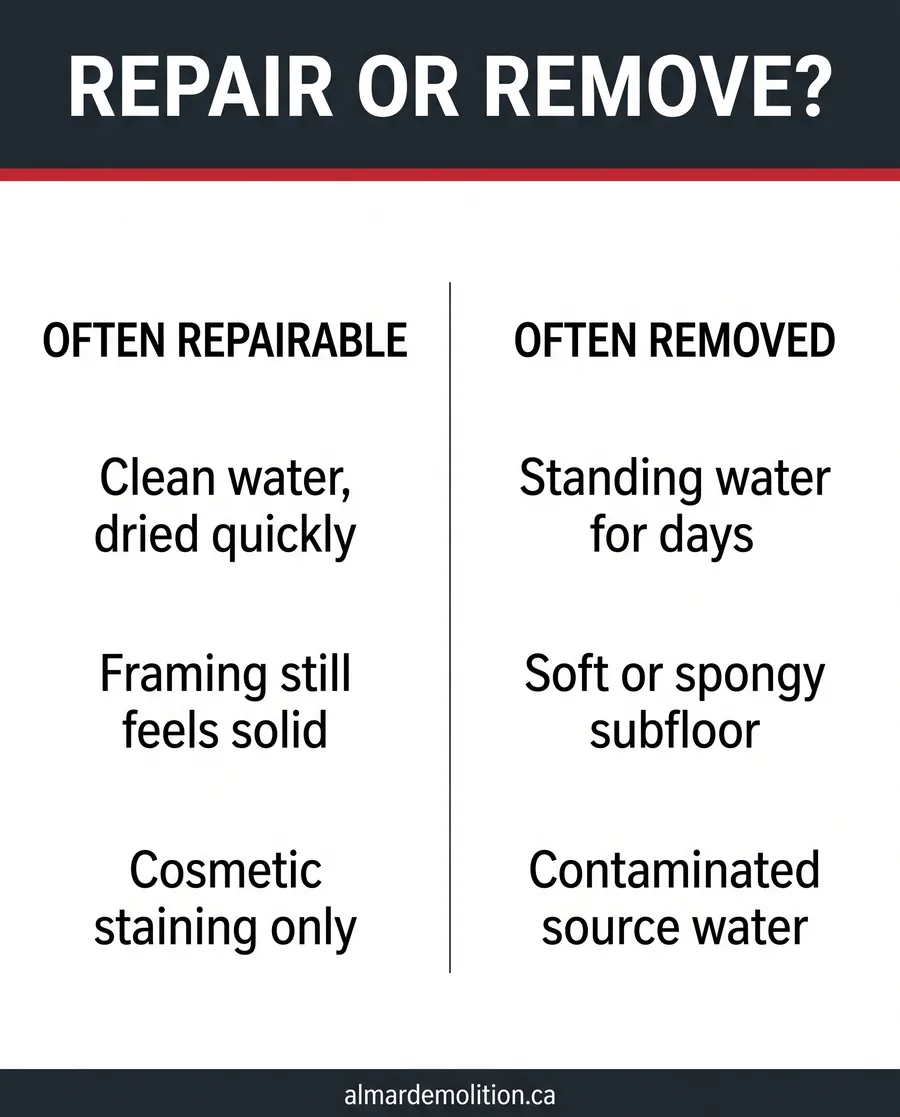
Not every call to demolish or repair water damage ends in demolition, and it helps to know what typically does not. A supply line that let go and got shut off within an hour, drywall that stayed damp rather than saturated, or a hardwood floor that cupped slightly but never sat in standing water are all situations where a competent repair usually holds.
| Situation | Usually Repair | Usually Demolish |
|---|---|---|
| Clean water, structurally sound, dried quickly | Yes, in most cases | Rarely |
| Material shows swelling, delamination, or severe contamination | Rarely on porous material | Usually, for that section |
| Backed-up drain or outside floodwater | Only non-porous surfaces | Usually, for porous material |
| Floor joists or subfloor feel soft or spongy | Rarely on the affected span | Usually |
| Cosmetic staining, structure and framing feel solid | Often, with drying and paint | Rarely |
Damage That Usually Points to Demolition
On the other side of the line: subfloor that has gone soft underfoot, insulation that stayed wet long enough to compress and lose its shape, and drywall that has visibly bowed or crumbles at the base. If any framing appears soft, deflected, cracked, or deteriorated, it requires assessment by a qualified structural professional before removal. Once material has broken down structurally, drying it out does not restore what it lost. At that point the honest scope is removal of that section, not a repaint over it.
Basements carry an extra wrinkle. A flooded basement often means flooring, drywall, and sometimes framing all saturated at once, and the enclosed, low-airflow space makes drying slower and less reliable than anywhere else in the house. That combination is a large share of why basement demolition and cleanout work comes up so often after a serious water event.
Save Your Money
Paying for drying and patching on material that was already broken down is money spent twice: once on the repair, again when it fails and the section comes out anyway. A short assessment before you commit to either path is the cheaper move.
What to Do in the First 48 Hours
The window right after water damage happens is where the repair-or-demolish call usually gets decided, mostly by how fast you act. This is the order that gives you the most options later:
- Shut off the water source if one is identifiable, and stop the spread with towels, a wet vac, or fans if it is safe to do so.
- Photograph everything before you move or discard anything, for your insurer and for whoever assesses the damage.
- Contact your insurer early, even if you are not sure the claim will proceed, since timelines matter for water damage claims.
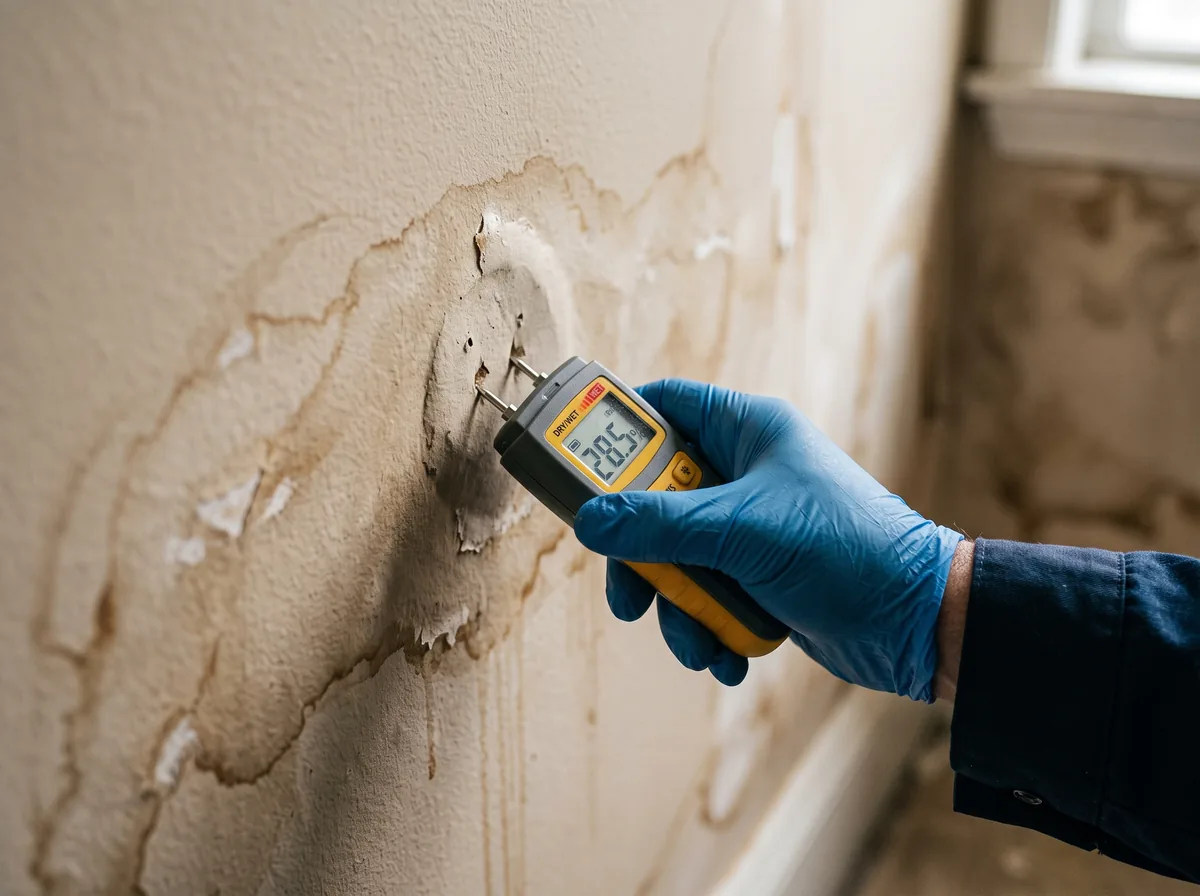
- Get a professional moisture reading rather than judging by touch or smell alone, especially on subfloor and framing.
- Hold off on any drywall or flooring repair until that reading confirms what is actually still dry.
What a Water-Damage Demolition Covers
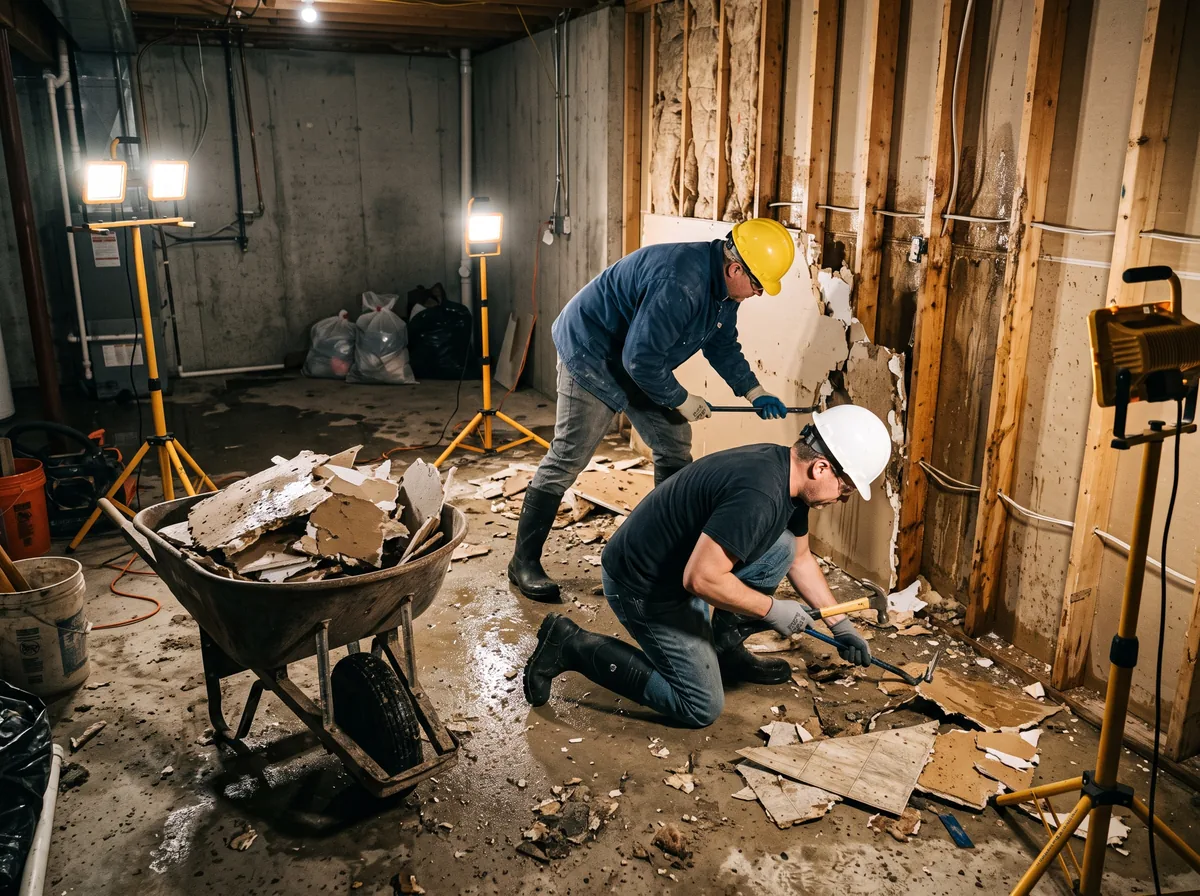
A demolition scoped for water damage is narrower than a full teardown. Crews open up and remove only what tested wet or shows visible breakdown: drywall to a set height above the waterline, affected subfloor and insulation, and any framing that has actually lost integrity, not the whole room by default. Everything removed gets sorted for disposal, and our rundown on how to handle debris and waste after a project like this covers what typically needs special handling.
Whether the removal needs a permit depends on scope, most often when it touches load-bearing framing or crosses into a larger renovation. Confirm that directly with the City of Toronto before work starts rather than assuming a small area is exempt. We always recommend a proper site inspection first, both to scope the removal accurately and to flag anything that needs a specialist’s eyes before demolition begins.
Good to know
This article is general guidance for GTA property owners weighing repair against demolition after water damage, not an assessment of your property. Insurance coverage, permit requirements, and the extent of hidden damage all vary by situation and need to be confirmed with your insurer, the City of Toronto, and a qualified professional before work begins. ALMAR Demolition GTA is not responsible for decisions made solely on the basis of this article.
Download the free quick guide
A printable walk-through for the first 48 hours: what to photograph, what to ask an inspector, and how to tell repair-friendly damage from a demolition scope.
Frequently Asked Questions
How long can drywall stay wet before it needs to be replaced?
There is no single cutoff that applies everywhere, but drywall that dries out within roughly 24 to 48 hours with clean water often survives, while drywall left wet for several days or saturated by contaminated water usually softens and loses strength in a way drying cannot reverse. Paper facing that has visibly bowed, bubbled, or come away from the gypsum core is a reliable sign that section needs to come out rather than dry in place. A moisture reading is a more dependable test than a visual guess.
Does homeowners insurance cover demolition after water damage?
Coverage varies a great deal by policy, by the source of the water, and by whether the damage is considered sudden versus gradual, so this is genuinely a question for your insurer and your specific policy rather than a general rule. What helps most is documenting the damage thoroughly and reporting it promptly, since both affect how a claim gets assessed. Ask your adjuster directly whether demolition and removal costs are included before you assume either way.
Can subfloor be saved if it only got a little wet?
Sometimes. Plywood or OSB subfloor that stayed damp briefly and dried quickly can often be saved, especially if it still feels firm underfoot with no visible swelling. Subfloor that stayed wet for an extended period, feels soft or spongy, or has visibly delaminated at the seams has usually lost enough strength that repair does not hold under normal foot traffic. Test firmness at several points, not just where the water first appeared.
What is the difference between drying out a house and demolishing the damage?
Drying addresses moisture that has not yet broken the material down: pulling humidity out of the air and structure with fans and dehumidifiers so nothing gets worse. Demolition addresses material that has already broken down and cannot be restored by drying alone, removing it so the space can be rebuilt on solid material. Many water events need both: drying for what is salvageable, targeted removal for what is not, in the same project.
Do I need a permit to remove water-damaged drywall or flooring?
It depends on the scope. Removing damaged drywall or flooring without touching structural framing is often treated differently than work that crosses into framing repair or a larger renovation. Rather than assume either way, confirm directly with the City of Toronto’s building division before work starts, particularly if the damage reaches load-bearing walls or the subfloor structure itself.
If you are still weighing whether to demolish or repair water damage in your own home after reading this, the verdict comes down to one question worth asking before anything else: has a moisture reading actually confirmed what is dry and what is not? Everything else follows from that answer.
ALMAR Demolition GTA scopes water-damage removals across Toronto and the surrounding region, sized to what the inspection finds rather than the whole room by default. If you want that assessment done properly, request a free demolition estimate, and we will tell you plainly what needs to come out.