


ABOUT OUR COMPANY
Professional Removal Of Stucco From Exterior Walls
Stucco is a durable cement-based material commonly used as an exterior finish on homes and buildings. While it’s long-lasting and weather-resistant, it can wear down over time and trap moisture.
Removing stucco isn’t as simple as scraping it off. It’s typically applied in multiple layers and bonded tightly to the underlying surface, often wood, brick, or concrete. Our team starts by taking a look at your walls and we use professional-grade tools with proven techniques to make sure you get a clean removal.
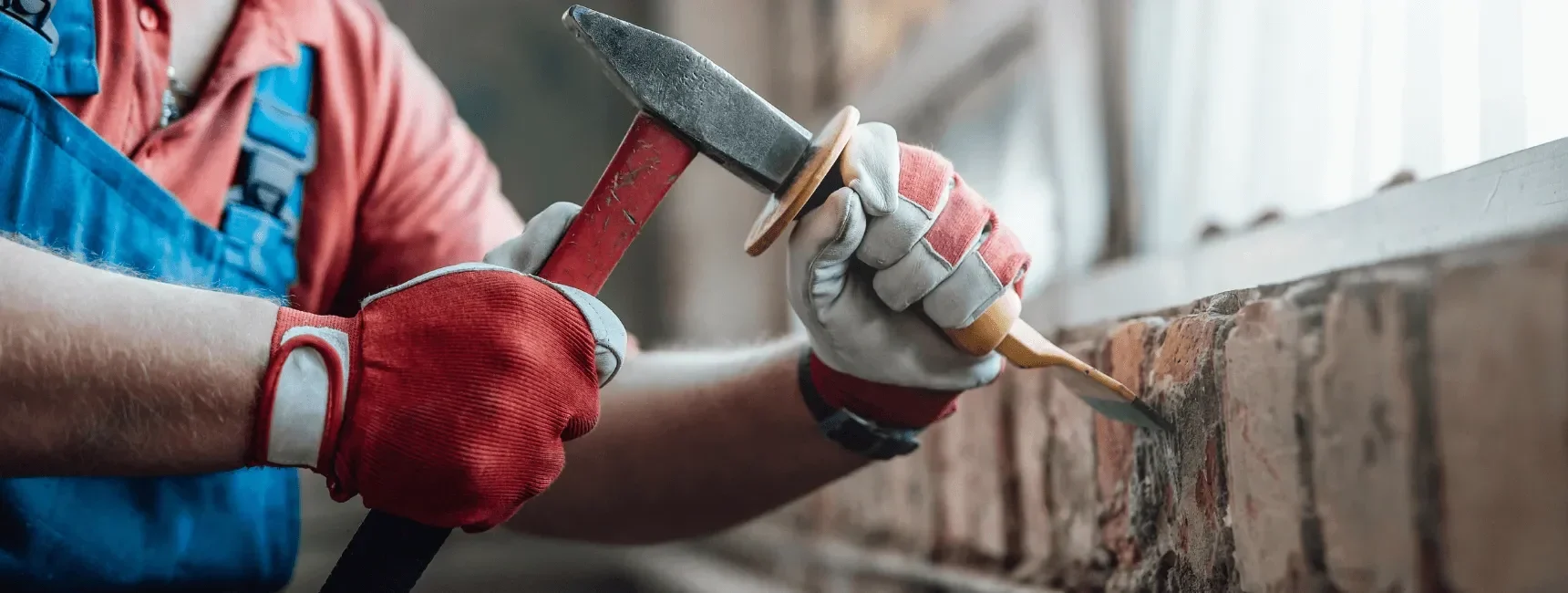
The process involves cutting the stucco into sections, prying it away in layers, and using protective measures to contain dust and debris. We take every step to make the removal safe, controlled, and efficient, whether we’re working on a residential home, commercial building, or cottage property.
- 20+ years of experience doing demolitions
- Registered with WSIB
- Complete service including initial assessment, professional service, and site clean-up




How Exterior Stucco Removal Runs
- Find out what is under it. Stucco can sit on wire lath over sheathing, on rigid foam, or straight onto block. What is underneath sets the method and tells you what condition the wall will be in when you get there.
- Test if the house is older. Pre-1990 stucco, parging and the paint over it can contain asbestos or lead. Where there is any doubt, testing comes before the first scraper touches the wall.
- Protect everything below. Ground sheets, window and door protection, and plants covered or fenced off. Stucco removal makes a lot of debris and it goes everywhere.
- Set up access. Scaffold or lifts for anything above the first storey, because this is not a ladder job.
- Strip it back. Stucco and lath come off in sections, working top down, exposing sheathing and any water damage behind.
- Clean and hand over. Debris cleared, fasteners pulled, and the wall left ready for the siding, cladding or rebuild trade.
What to Expect Once the Stucco Is Off
The removal is straightforward. The surprises are behind the wall, so plan for them:
- Water damage to sheathing and framing, especially under windows and at roof junctions
- Missing or failed building paper, which usually has to be replaced before new cladding goes on
- Old stucco on wire lath, which comes off in heavy sheets and adds disposal weight
- Hazardous material testing on anything from before the 1990s
- Access equipment for upper storeys, which is a real cost on a two or three storey home
- Weather, since an open wall should not sit exposed through a storm
More Demolition Services
ALMAR handles the whole range across Toronto, the GTA and Southern Ontario. A few that often go with this one:
- Deck removal and demolition
- Swimming pool removal
- Hot tub removal
- Shed and garage demolition
- Playground removal
See the full list on our demolition services page, or check the areas we serve.
Frequently Asked Questions
Does old stucco contain asbestos?
It can. Stucco, parging and the coatings over them were places asbestos turned up in older construction, and lead is a risk in old paint. If the house predates the 1990s, testing first is the right call, and any abatement is done by a licensed abatement contractor before removal starts.
Will removing the stucco damage the wall underneath?
Removal itself is controlled, but stucco often hides damage rather than causing it. Rotten sheathing, failed building paper and water tracks under windows commonly appear once the wall is open. Budget for some repair; how much is impossible to know until it is exposed.
Can you remove stucco from just one wall?
Yes. Partial removal is common when only one elevation has failed or when an addition is going on. It needs a clean edge and a plan for how the new cladding meets the old.
Do I need a permit?
Recladding rules vary by municipality and by what you are putting back. Check with your local building department before work starts. ALMAR does not include permit applications in the service, though we can assist for a fee.
We Offer Professional Stucco Removal Throughout Southern Ontario