Published 22 September 2026. Last updated .
The day your demolition crew arrives, the absolute last thing you want is an excavator that cannot actually reach the work area. Access is the quiet make-or-break factor of any teardown project. A little bit of preparation saves hours of costly delay and physically protects your yard. The expert demolition contractors Toronto homeowners rely on will always walk the site with you first. However, knowing what to clear and protect beforehand keeps a professional residential demolition on schedule and your lawn in one piece.
This guide covers exactly how to prepare your yard for heavy demolition equipment. We discuss establishing the access route, using ground protection, clearing trees and utilities out of the swing path, and matching the machine size to your lot. This is essential planning information to help you get ready, not instructions on how to operate the heavy equipment yourself.
In This Article
Start With the Access Route
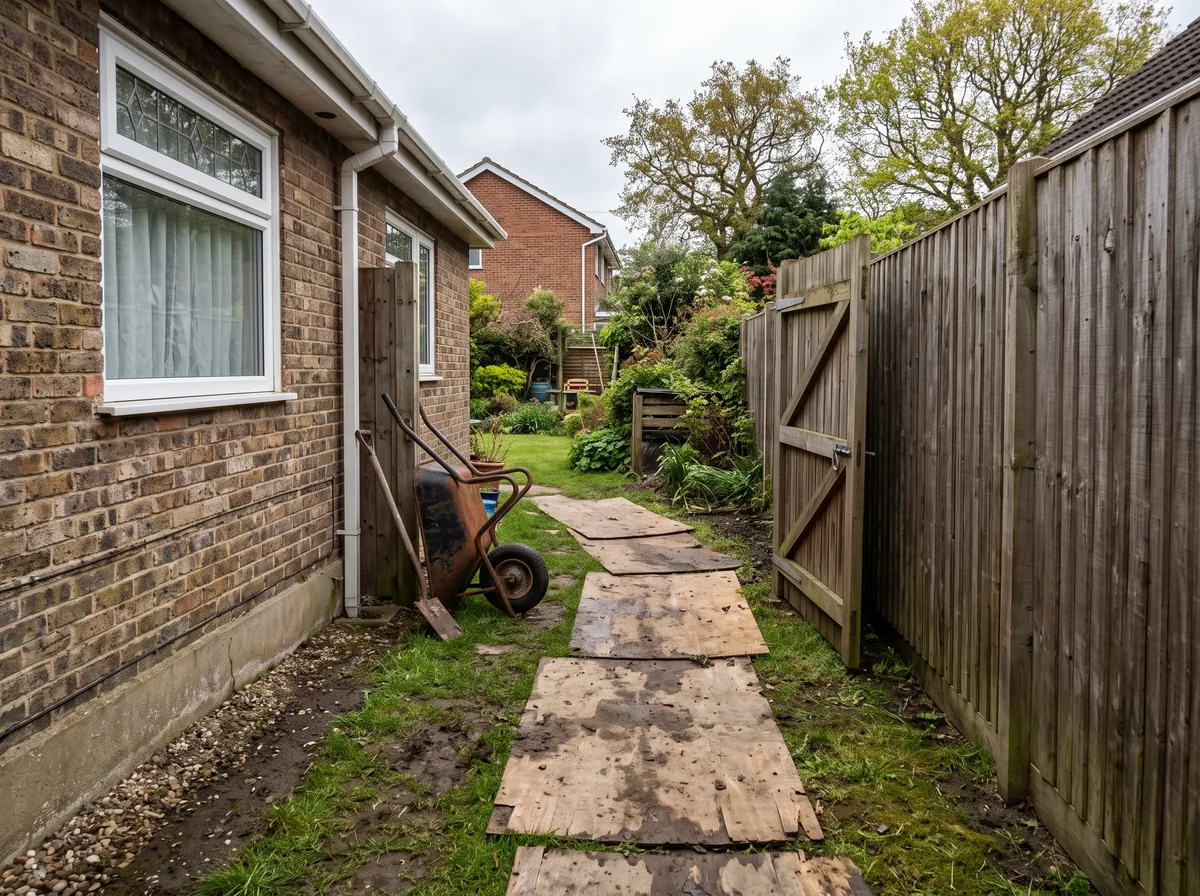
Before you do anything else, think about how the heavy machinery and the disposal bins will actually get to the work area and back out again. An excavator or a skid steer needs a clear, firm path from the street straight to the demolition zone. The disposal bins also need a spot that a large truck can easily reach. On many tight Toronto lots, the only way in is a narrow side yard barely wider than the machine itself, making early planning crucial.
- Identify the widest, firmest route from the street to the work area, and measure any gate or side-yard pinch points.
- Clear that path of parked vehicles, trailers, bins, heavy planters, and anything else the machine would have to weave around.
- Confirm exactly where disposal bins will sit and ensure a truck can drop and pick them up without blocking the road illegally.
- Check for soft ground, septic beds, or buried cisterns along the route that heavy machines should never cross.
- Note any low branches or overhead wires along the route that a raised boom or a loaded dump truck could catch.
Quick Take
Access decides the day. Clear the widest, firmest path from the street to the work area, physically measure your tightest gate, and pick a bin spot a truck can easily reach. Solve your access problems first, and the rest of the site prep falls naturally into place.
Protecting the Ground and Lawn
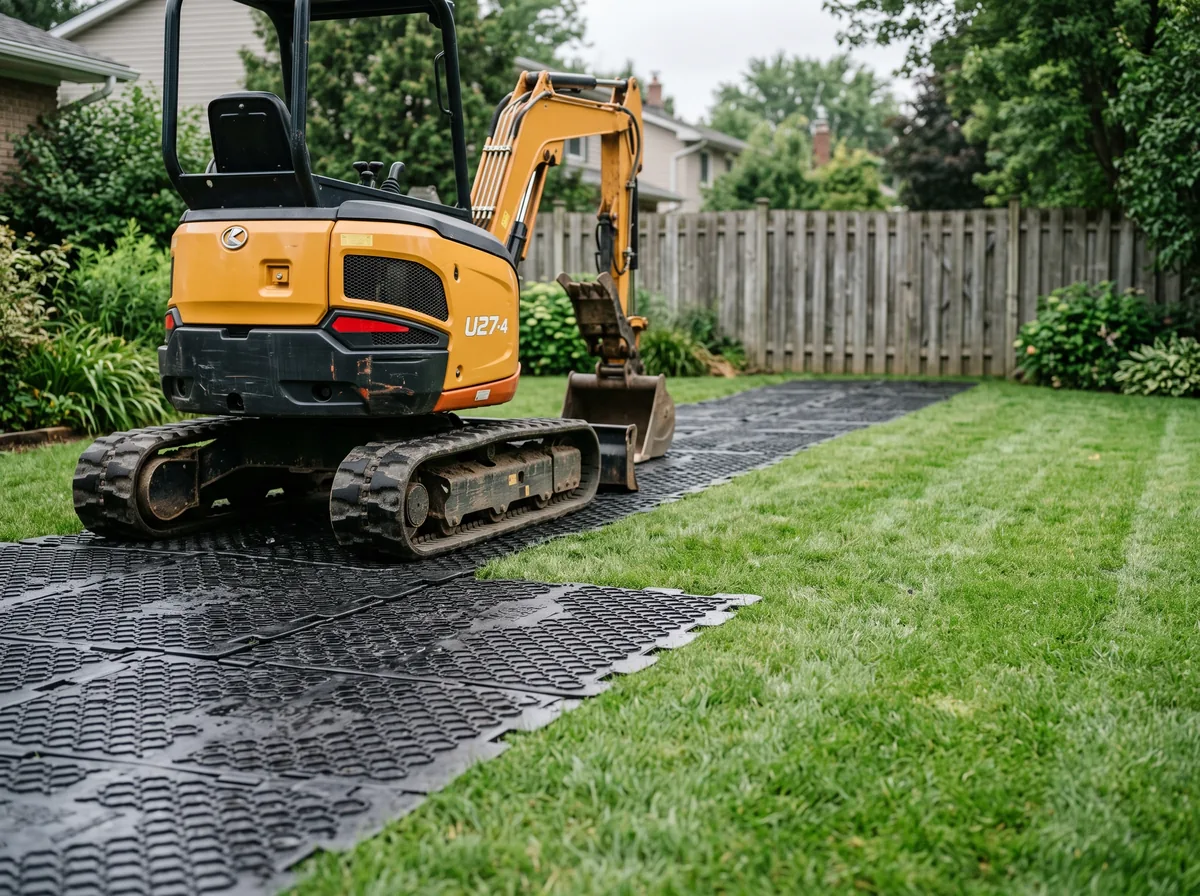
Heavy equipment concentrates a massive amount of weight onto a set of tracks or tyres. Driving an excavator across a soft lawn, a freshly poured driveway, or a delicate septic bed can leave deep ruts, cracks, or worse. The professional fix is ground protection. Contractors use heavy mats or plywood that spread the load and give the machine a stable surface to drive on. A professional commercial demolition crew brings these mats for both the access route and the primary work zone.
You can help by pointing out exactly what needs protecting before the machine rolls in. Highlight the good part of the lawn you want to keep, a decorative driveway, an underground irrigation system, or a septic field. Wet spring and fall conditions make this preparation even more important, since saturated ground ruts far more easily than dry soil.
Did You Know?
Ground protection mats do much more than save your grass. By widely spreading a machine’s weight, they keep it from sinking or tipping over on soft ground, protect shallow utilities and septic beds from being crushed, and give the tracks the traction required to work safely. They are an essential safety tool as much as a lawn-saving one.
Clearing Trees, Utilities, and Overhead Lines
Heavy machines swing, reach, and lift. Because of this, the work zone needs safe clearance in all three dimensions, not just a clear footprint on the ground. Two categories matter the most: what is hanging above the machine, and what is buried below it.
Overhead, keep a close watch for thick tree limbs, hydro service lines running to the house, and communication cables. A boom or a loaded bucket that catches a live line is a serious hazard. Below ground, buried utilities absolutely have to be located before any digging or foundation work begins. That means calling for an Ontario One Call locate, the free click-before-you-dig service that marks buried lines. Your contractor arranges the locate, but it is always worth confirming it is done before excavation starts.
- Trim or note low branches over the access route and work zone, but leave large protected-tree work to the pros.
- Point out the overhead hydro and communication lines running directly to the house and any outbuildings.
- Make sure a utility locate is fully booked so buried gas, hydro, water, and telecom lines are clearly marked.
- Flag anything you know is buried that a public locate might miss, like an old sprinkler line, a propane tank, or a private data cable.
Red Flag: Digging Before the Locate
Never let excavation start before buried utilities are fully located and marked. Hitting a gas or hydro line is life-threatening and can knock out service for the entire block. A locate request is legally required before excavation. Public utility locates are free, but privately owned lines, septic systems, and related infrastructure may require a paid private locate according to Ontario One Call’s homeowner guide. If digging is planned and you have not seen locate marks painted on the grass, stop the crew and ask.
Matching Machine Size to Your Lot
Choosing the right machine depends on the scope of the job and, just as importantly, on what your lot can physically fit. A professional contractor sizes the equipment to the access you have available. Knowing the rough machinery categories helps you understand why they may recommend using a smaller machine and spending a bit more time on a tight lot.
| Machine Type | Rough Access Needed | Typical Use |
|---|---|---|
| Mini excavator/skid steer | About a 1-metre gate width | Tight side yards, interior work, and small structures |
| Compact excavator | A wider gate or open side yard | Sheds, detached garages, small additions, backyard hardscaping |
| Mid-size excavator | Driveway or open lot access | Full house teardowns, digging foundations, larger structures |
| Large excavator | Wide, firm open access | Commercial builds and large residential demolition |
Please note: The access figures above are general planning references, not exact specifications. Actual clearance requirements depend on the specific machine model, the attachments used, and the current ground conditions. Your contractor selects and sizes equipment after thoroughly assessing your site. Always rely on their on-site judgement rather than these generalized ranges.
Save Your Money
Do not assume bigger is always better. On a tight lot, forcing a large machine in can mean removing a fence or damaging the yard, which instantly adds cost. A smaller machine that fits the access cleanly often finishes the job with less repair work required afterward. Trust the contractor’s sizing over the urge to bring in the biggest machine.
Your Pre-Arrival Yard Checklist
Warning: This checklist covers homeowner preparation only. Operating demolition equipment, cutting protected trees, and capping utilities are jobs for licensed professionals. Do not attempt them yourself. Always hire a licensed demolition contractor. ALMAR Demolition is not responsible for injury, damage, or cost from work attempted based on this article.
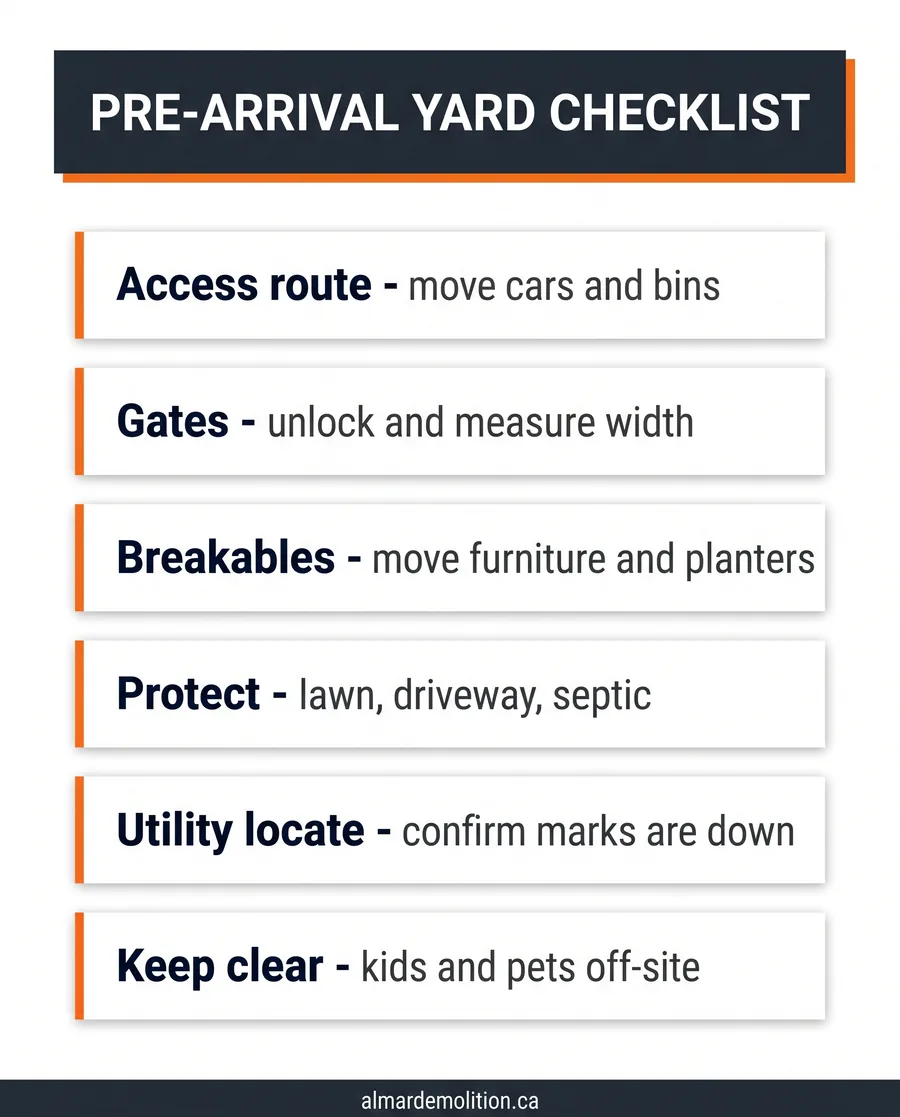
- Clear the access route of parked vehicles, trailers, bins, and loose items the day before the crew arrives.
- Unlock or temporarily remove any gates the crew will need, and measure the tightest width for them in advance.
- Move patio furniture, planters, garden decor, and anything breakable well clear of the active work zone.
- Point out exactly what to protect, including the lawn you want saved, a good driveway, underground irrigation, and any septic bed.
- Confirm the utility locate is booked and the painted marks are down before any digging starts.
- Note overhead wires and low-hanging branches over the route and work area for the crew to see.
- Keep your kids and pets securely indoors or entirely off-site for the duration of the machine work.
- Give your immediate neighbours a heads-up about the dates, the expected noise, and any required shared access.
Pro Tip
Take clear, dated photos of your yard, driveway, and any shared fences before the demolition crew arrives. If a question ever comes up about a new rut, a scuff mark, or a boundary line, those photos settle it quickly and keep the whole job on good terms.
What to Expect on Demolition Day
On demolition day, the professional crew usually walks the site with you, lays ground protection mats along the route and work zone, and carefully positions the machine and disposal bins. Expect substantial noise and dust during the active teardown, both of which a good crew manages with water spraying and careful sequencing. For more information on how surrounding structures are shielded, our guide on protecting surrounding structures during a teardown goes deeper. If your lot has incredibly tight access, read our tight access demolition strategies to see exactly how crews handle the squeeze.
“The crew put down mats the whole way across the yard before the excavator moved an inch. After a full teardown, the lawn barely had a mark on it. That prep made all the difference.”
— GTA Homeowner, Teardown Project
Download the Free Quick Guide
A one-page checklist to get your yard ready for heavy demolition equipment on the big day.
Frequently Asked Questions
Getting ready for a teardown and worried about access or protecting your yard? ALMAR Demolition sizes the right equipment, lays ground protection, and works clean across Vaughan, Richmond Hill, Markham, and the wider GTA. Get a free estimate today and we will walk your site and plan the access before the big day arrives.