What is soft demolition? It is the careful, hand-led removal of a building’s interior, the finishes, fixtures, walls, and systems, while the structure itself stays standing. If you are planning a gut renovation in the GTA, this is almost certainly the kind of demolition your project needs, and our residential demolition team handles it across Toronto every week.
The word demolition makes most people picture an excavator punching through a wall. Soft demolition is the opposite of that. No machine swinging at the building, no dust cloud rolling down the street. Just a crew working room by room, taking the inside apart in the right order so the shell is ready for whatever comes next.
Quick take
Soft demolition keeps the building up and takes the inside out. Hard demolition takes the building down. If you are renovating, you want soft. If you are clearing the lot, you want hard.
In this article
What soft demolition actually means
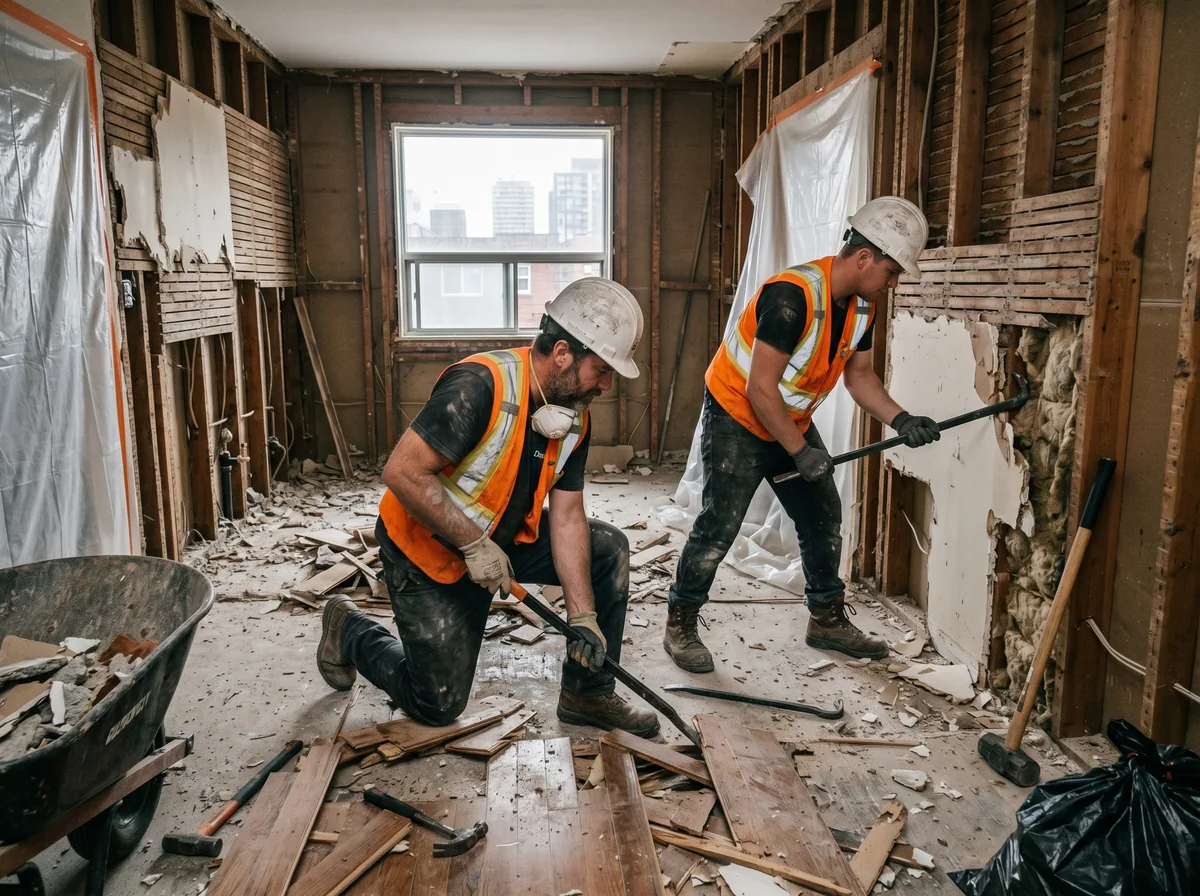
Soft demolition, sometimes called a strip-out or soft strip, is selective removal done by hand. A crew pulls out drywall, flooring, cabinetry, ceilings, fixtures, and non-structural partitions, then sorts the debris for disposal or recycling. The load-bearing frame, the floors you stand on, and often the mechanical systems you plan to reuse all stay in place.
The tools tell the story. A soft demolition crew works with pry bars, reciprocating saws, hand sledges, and dust barriers, not high-reach excavators. The goal is control. Everything that comes out is something you chose to remove, and everything that stays is protected while the work happens around it.
Soft demolition versus hard demolition
The clearest way to understand soft demolition is to put it next to its opposite. Hard demolition, the mechanical kind, is about speed and force. Soft demolition is about selection and care. Most renovation projects use soft demolition; most tear-downs use hard demolition; and a surprising number of jobs use both, soft first to remove hazards and salvageable material, then hard to bring the shell down.
| Soft demolition | Hard demolition | |
|---|---|---|
| What it does | Removes the interior, keeps the structure | Brings the whole structure down |
| Main tools | Pry bars, hand saws, dust barriers | Excavators, high-reach booms, breakers |
| Best for | Renovations, fit-outs, gut jobs | Tear-downs, new builds, lot clearing |
| Speed | Slower, room by room | Fast, whole-structure |
| Material salvage | High, fixtures and finishes saved | Low, mostly crushed and hauled |
Pricing note: The figures on this page reflect typical market rates in Toronto and the GTA as of 2026. What you actually pay depends on the size of the structure, site access, the disposal and tipping fees that apply, and whether a designated substance survey or abatement is needed first. Always get a written, on-site quote before you commit.
Notice that the two are not really competing. They answer different questions. The question soft demolition answers is: how do I clear this space without losing the building? Once you know which question you are asking, the choice makes itself.
When Toronto projects use soft demolition
Soft demolition shows up at the start of almost every serious renovation in the GTA. A few of the most common scenarios where our crews get the call:
- Home gut renovations. Stripping a house or condo back to the studs before a full rebuild, while keeping the structure and often the exterior walls.
- Kitchen and bathroom remodels. Pulling out cabinets, tile, fixtures, and finishes so a new layout can go in cleanly.
- Commercial fit-outs. Clearing an office, retail unit, or restaurant of the previous tenant’s build-out before a new one is constructed.
- Condo interior renovations. Selective removal inside a unit where the building shell and shared systems must stay untouched and protected.
- Pre-abatement removal. Taking out clean finishes by hand so a designated substance survey and any abatement can proceed efficiently.
People often ask
“Can you just leave the kitchen wall?” Yes, that is the whole point of soft demolition. We remove what you tell us to remove and protect the rest. If a wall, floor, or fixture is staying, it gets covered and worked around, not knocked out by accident.
Permits, asbestos, and the law
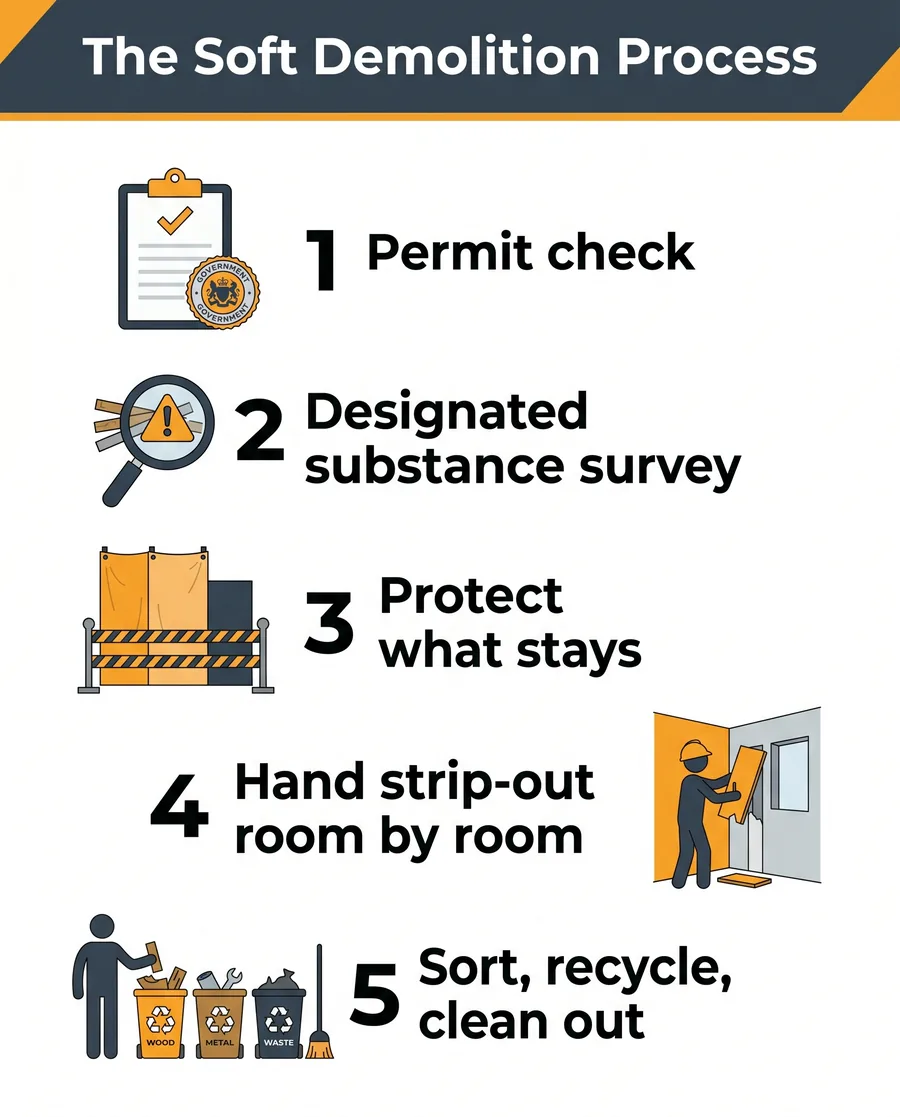
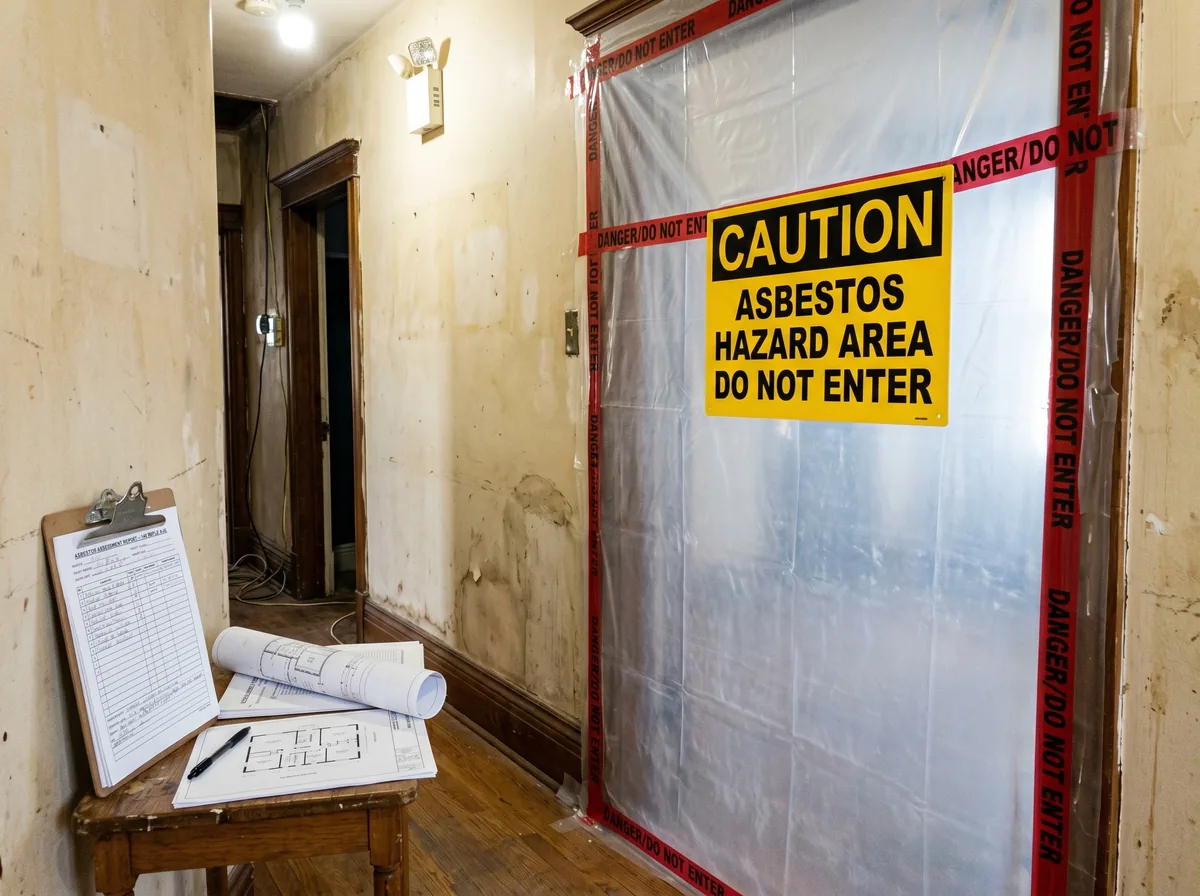
Safety and permit notice: This article is general information, not a permit or a substitute for professional advice. Almar Demolition GTA is not responsible for any injury, damage, or cost from action taken based on it. Most demolition in Toronto and the GTA needs a City of Toronto building permit before work starts. Any building put up before 1990 may hold asbestos or other designated substances, so it needs a designated substance survey under Ontario Reg 278/05 and removal by a licensed abatement contractor before any tear-down begins. When in doubt, stop and call a licensed demolition contractor.
Soft demolition feels low-risk because the building stays up, but the legal and safety side is just as serious as any tear-down. Two things matter most in Toronto.
First, permits. The City of Toronto building permit process applies to interior work that touches structure, plumbing, gas, electrical, or fire separations. Cosmetic removal may be exempt, but the moment you affect a system or a load path, a permit is in play. Confirm before you swing the first pry bar.
Second, designated substances. Any building constructed before 1990 may contain asbestos in ceilings, floor tiles, pipe insulation, and joint compound. Ontario’s Regulation 278/05 on asbestos requires a designated substance survey before demolition, and removal must be done by a licensed abatement contractor. Worker safety guidance from the Ontario Ministry of Labour and the Infrastructure Health and Safety Association backs this up. Disturbing asbestos during a soft strip is one of the most common and most preventable mistakes in the trade.
What it costs and what drives the price
Soft demolition is priced by labour and disposal, not by the wrecking-ball hour. The biggest cost drivers are how much material comes out, how it leaves the building, and whether any abatement is needed first. A second-floor condo with one elevator and a debris chute costs more to clear than a main-floor space with a driveway and a bin right outside.
Did you know
Recycling and salvage can offset part of a soft demolition bill. Cabinets, fixtures, and clean wood often have resale or donation value, and sorted debris usually costs less to dispose of than mixed loads at GTA transfer stations. A crew that sorts as it works can save you real money at the scale.
Download the free quick guide
A one-page checklist covering permits, the asbestos survey, what to protect, and the questions to ask before any GTA strip-out begins.
Frequently asked questions
Sources and further reading
- City of Toronto, Building Permits: Before You Apply.
- Government of Ontario, Ontario Regulation 278/05: Asbestos on Construction Projects and in Buildings and Repair Operations.
- Ontario Ministry of Labour, Immigration, Training and Skills Development, Asbestos in the workplace.
- Infrastructure Health and Safety Association (IHSA), construction health and safety guidance.
The verdict on soft demolition
Soft demolition is the careful way to clear a space without losing the building, and for almost any GTA renovation, it is the right first move. Get the permit checked, get the asbestos survey done if your building predates 1990, and let a crew take the inside apart in the right order. Contact Almar Demolition GTA for a free, on-site quote across Toronto and the GTA.

Written by
Marco B.
Demolition Project Manager
Marco runs interior strip-out and structural demolition crews across the GTA. He started swinging a sledgehammer on Etobicoke condo gut jobs in 2003 and now manages multi-trade demolition projects from permit through final dump-truck. Holds Working at Heights, Confined Space Entry, and Asbestos Type 1 & 2 awareness certifications.