
Published 11 November 2026
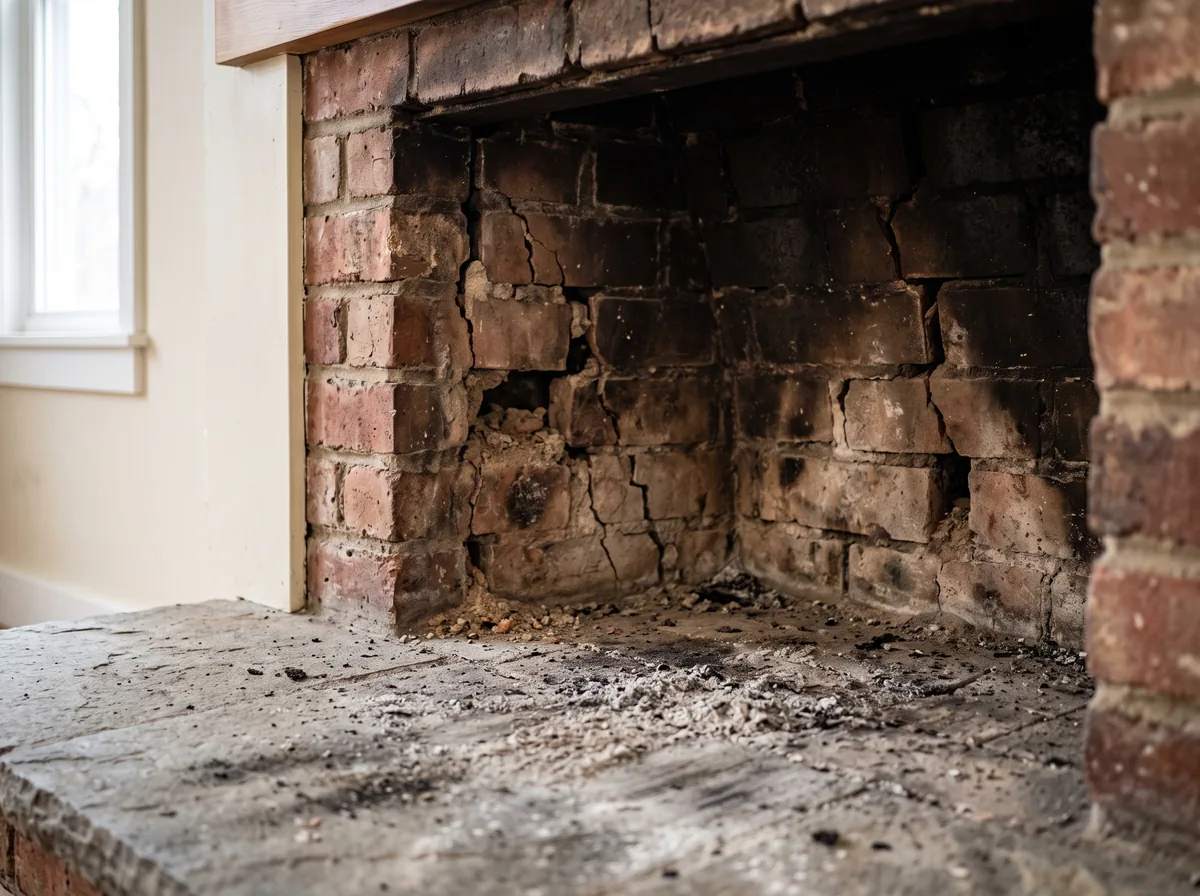
A homeowner near Leslieville called us in February with a mason’s note in hand: the fireplace was, in his words, “not really repairable.” Before booking a professional fireplace removal service, she wanted a second opinion. What we found on that visit were the same signs your fireplace needs removal that show up in most GTA homes once a masonry chimney passes a certain age: a firebox that had pulled away from the wall behind it, mortar joints crumbling faster than a spring repointing could keep up with, and a smoke smell that had started reaching a bedroom nowhere near the hearth.
None of that meant the fireplace was doomed the day it was built. It meant the point where patchwork repair stops making sense had arrived, and knowing how to spot that point saves homeowners a round of repairs that would not have held anyway.
Why Fireplaces Sometimes Need Full Removal
A masonry fireplace and chimney is one of the harder-working parts of a house. It carries heat and moisture cycles every winter, takes on freeze-thaw stress that few other assemblies see, and sits exposed on the roofline where wind and water find every weak joint first. Repair handles most of that wear well: repointing mortar, patching a crown, replacing a damper, relining a flue. Those are routine jobs, and a fireplace that gets them on schedule can keep working for a long time.
Removal enters the conversation once the damage stops being surface level. A firebox separated from its wall, a chimney that has visibly begun to lean, or masonry that crumbles under light pressure isn’t a one-season problem. Patching them buys a season, maybe two, before the same symptoms return with a wider crack behind them. That is the pattern worth watching for.
Six Warning Signs Your Fireplace Chimney Needs Removal
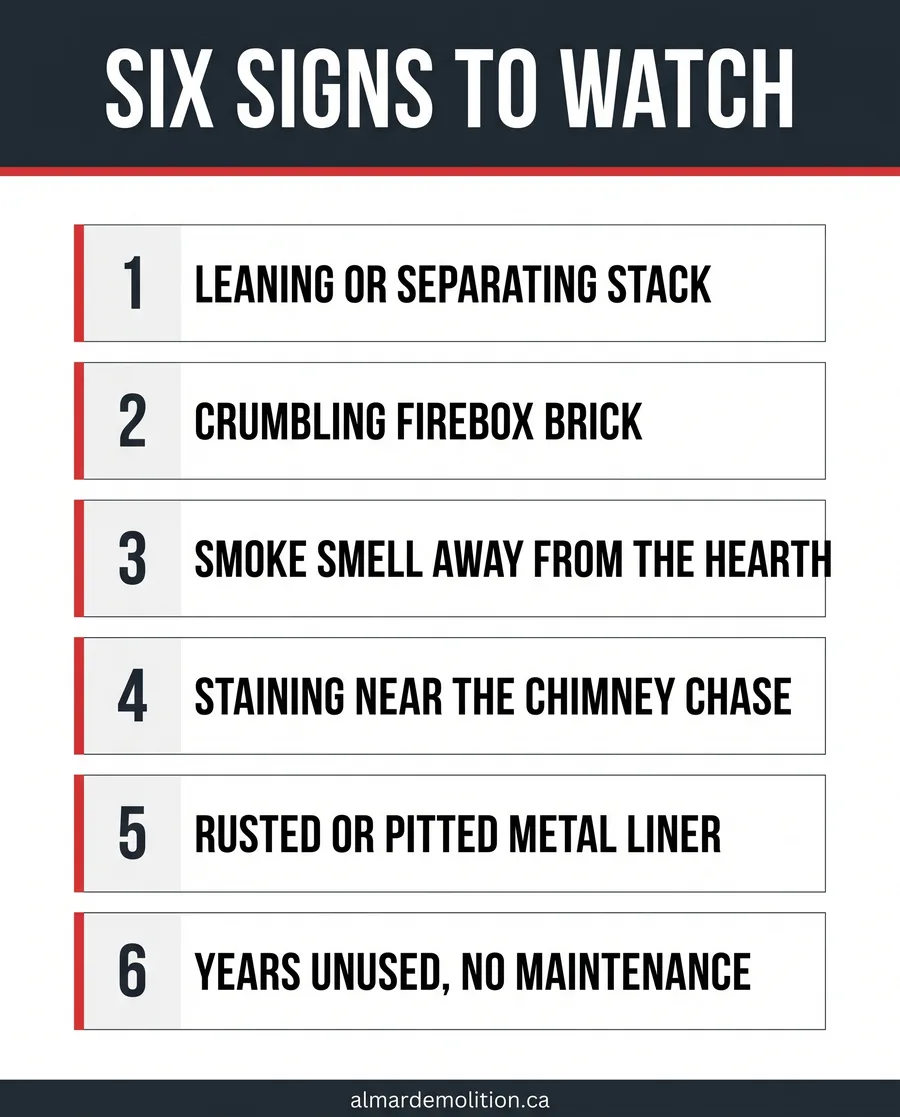
These are the signs your fireplace needs removal that we see most often on calls across the GTA. One or two on their own might still be repairable. Several together, especially with visible movement, usually are not.
- The chimney stack has visibly leaned or pulled away from the roofline
- Firebox or flue brick crumbles or flakes when you press on it
- A smoke or creosote smell reaches rooms away from the fireplace
- Water staining has appeared on a ceiling or wall near the chimney chase
- A metal liner shows heavy rust, pitting, or open seams
- The fireplace has sat unused for years with no maintenance history
Red Flag
A chimney stack with visible lean or a separation crack running through the masonry is not a wait-until-spring item. Stop using the fireplace, keep people and vehicles clear of the area below it, and have a qualified professional look at it promptly.
Repair or Removal: How to Decide
Most homeowners are not trying to become chimney experts, they just want to know which pile their fireplace falls into. This is the rough sorting we use on a site visit to weigh the signs a fireplace needs removal against what a mason can still fix, though every chimney gets looked at on its own terms before anything is confirmed.
| What You’re Seeing | Usually Points to Repair | Usually Points to Full Removal |
|---|---|---|
| A few cracked bricks on the crown | Often, a mason can rebuild the crown | Rarely, unless cracking has spread wide |
| Occasional smoke smell, otherwise drafts fine | Often a liner, damper, or cap issue | Only if the flue itself has failed |
| Stack leaning or separating from the roofline | Rarely a lasting fix on its own | Usually, once movement is confirmed |
| Firebox brick crumbling to the touch | Sometimes, if the damage is shallow | Often, once the mortar has lost its bond |
| Years unused with heavy liner corrosion | Occasionally, with a full liner replacement | Usually simpler than restoring an old flue |
Pro Tip
A yearly inspection catches most of this before it becomes an either-or decision. The Chimney Safety Institute of America publishes homeowner guidance on inspection levels and what a technician should be checking, which is a useful reference before you book one. The Chimney Safety Institute of America is a good starting point.
What a Full Removal Involves
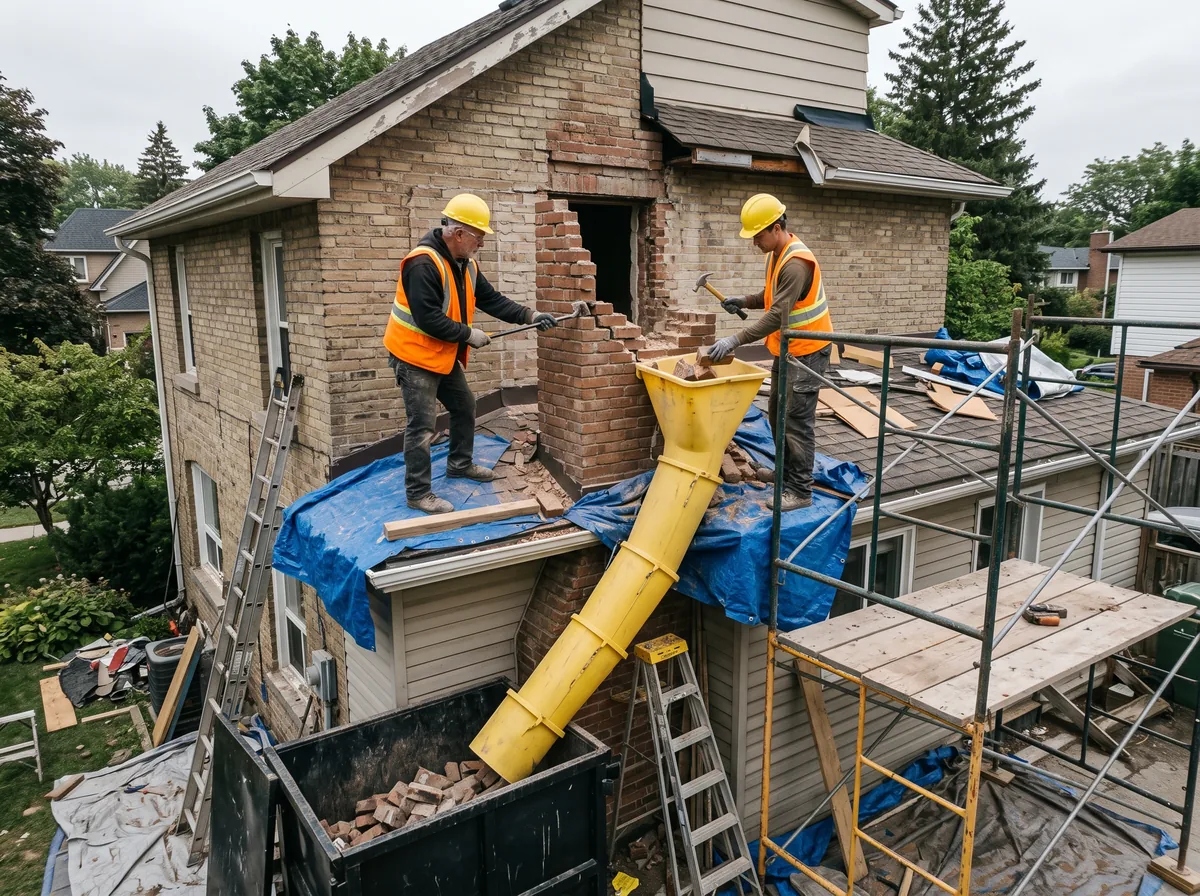
Once removal is the right call, the work itself is more involved than most homeowners picture. Crews open up the firebox and flue, take down the masonry stack in sections, and then have to close up everything the chimney used to occupy: roof decking, flashing, siding, and often an interior wall or chase that framed it in. Skipping any of those steps is how a chimney removal turns into a leak six months later.
We walk every property first to scope exactly how much comes out and how the opening gets finished, because a full chimney teardown on a two-storey semi is a different job than removing a single interior firebox and capping the flue below the roofline.
Permits, Hazards, and Who to Call
Whether a fireplace or chimney removal needs a permit depends on the scope of the work and how the house is classified, and that is a determination the City makes, not a contractor. Before anything is scheduled, it is worth confirming the requirement directly through the City of Toronto’s permit application process so the project starts on solid ground. Our own rundown of what permits a demolition project needs covers the general categories, though your specific address and scope still need to be confirmed with the City.
Older homes can also carry hazardous materials in and around an aging chimney chase, from parging compounds to insulation types that are no longer used. If a house was built before the 1990s and anything in that area looks disturbed or deteriorated, treat it as unconfirmed rather than assume it is fine, and have it checked by a licensed abatement contractor before demolition starts. Our guide on avoiding common demolition hazards walks through what that first check usually covers.
Good to know
This article is general information for GTA homeowners weighing fireplace repair against removal, not an assessment of your property. Permit requirements, hazardous material rules, and structural condition all vary by address and need to be confirmed with the City of Toronto and a qualified professional before any work is scheduled. ALMAR Demolition GTA is not responsible for decisions made solely on the basis of this article.
Download the free quick guide
A printable guide to the warning signs, what to photograph before you call anyone, and the questions worth asking a contractor or inspector.
Frequently Asked Questions
How do I know if my fireplace needs removal instead of repair?
Look for movement, not just wear. Cracked mortar or a chipped crown is usually repairable. A firebox pulled away from the wall, a leaning stack, or brick that crumbles under light pressure points toward removal, because those are signs the masonry has stopped holding together as a unit. A tap test and a close visual check by a qualified technician will usually confirm which category you are in, so treat a self-assessment as a starting point rather than the final word.
Is it safe to keep using a fireplace with a leaning chimney?
Treat a visibly leaning or separating chimney as unsafe to use until it has been looked at. The lean tells you the masonry is no longer sitting the way it was built to sit, and continued use adds heat cycling on top of that movement. Stop lighting fires, keep the area beneath and around the stack clear of foot traffic and parked vehicles, and have a qualified professional assess it before you decide on repair or removal.
Do I need a permit to remove a fireplace or chimney in Toronto?
Often, yes, though the exact requirement depends on the scope of the work and how your property is classified. Removing an interior firebox is treated differently than taking down an entire exterior chimney stack. Rather than guess, confirm directly with the City of Toronto’s building division before any work is booked. A reputable contractor will build permit confirmation into the quote instead of assuming none is needed.
What happens to the roof and chimney chase after removal?
The opening left behind gets closed up as part of the same project, not treated as a separate step. That typically means new roof decking or patching where the chase passed through, flashing tied into the existing roofing, and matching siding or interior finish where the chase was framed in. A removal that skips this finishing work is the most common reason a leak shows up months later, so ask any contractor exactly how they plan to close the opening.
Can I remove just the interior fireplace and leave the chimney stack?
Sometimes, depending on how the chimney is built and what you want for the exterior afterward. A partial removal takes out the firebox and interior chase while capping the flue below roofline, which costs less disruption but leaves the exterior stack in place. A full removal takes the stack down too. Which option fits your house is worth walking through on site, since chimney construction varies a lot across GTA homes of different ages.
If your fireplace is showing more than one of the signs above, and you suspect these are the signs your fireplace needs removal rather than another repair, here is the order we would take them in:
- Stop using the fireplace and keep the area around a leaning or cracked stack clear.
- Photograph the firebox, the chase, and any staining or corrosion you can see, from a few angles.
- Book an inspection with a certified chimney technician and ask them to name the cause, not just the fix.
ALMAR Demolition GTA removes fireplaces and chimneys across Toronto and the surrounding region, matched to whatever scope the inspection turns up. If you want a straight answer on repair versus removal, request a free demolition estimate and we will walk the chimney with you.